Desk placement and light source position: causes and adjustments for back to door, facing a wall, under a beam, and light direction
KarmaSpace translation
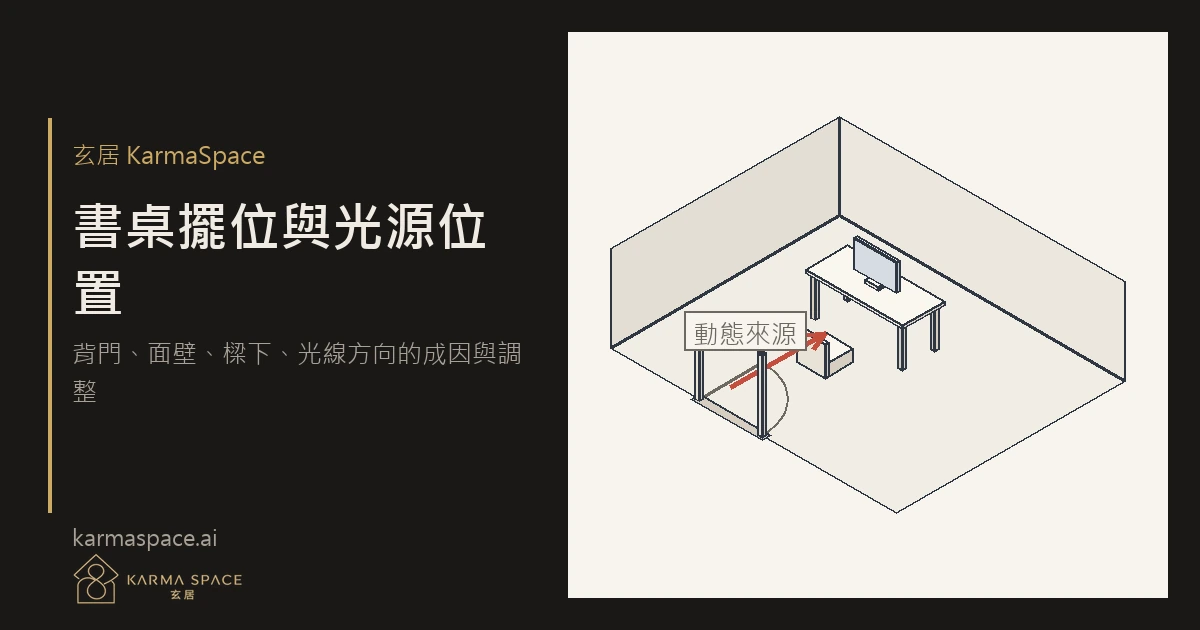
If you cannot settle at your desk, it is usually one of four things: your back is to the doorway, you face a wall, the seat is under a beam, or light comes straight at you from the front. The adjustments in order are: turn the chair so the door falls to the diagonal front, find an outlet for the gaze when facing a wall, move the seat out from under the beam, and shift the light source to the side; change only one thing at a time, so you know which one worked.
Being unable to sit still is often not a matter of willpower. You think you are distracted, but your body is actually responding to the environment. If the desk position is unsuitable, even the best chair cannot keep you there.
This article does not discuss spirits or marvels, only four concrete things: back to the door, facing a wall, under a beam, and light direction. Each has an observable cause and an actionable adjustment. After reading, you will know where your own seat has gone wrong and what to do next.
Backing the door: an unseen threat, with the body constantly on guard
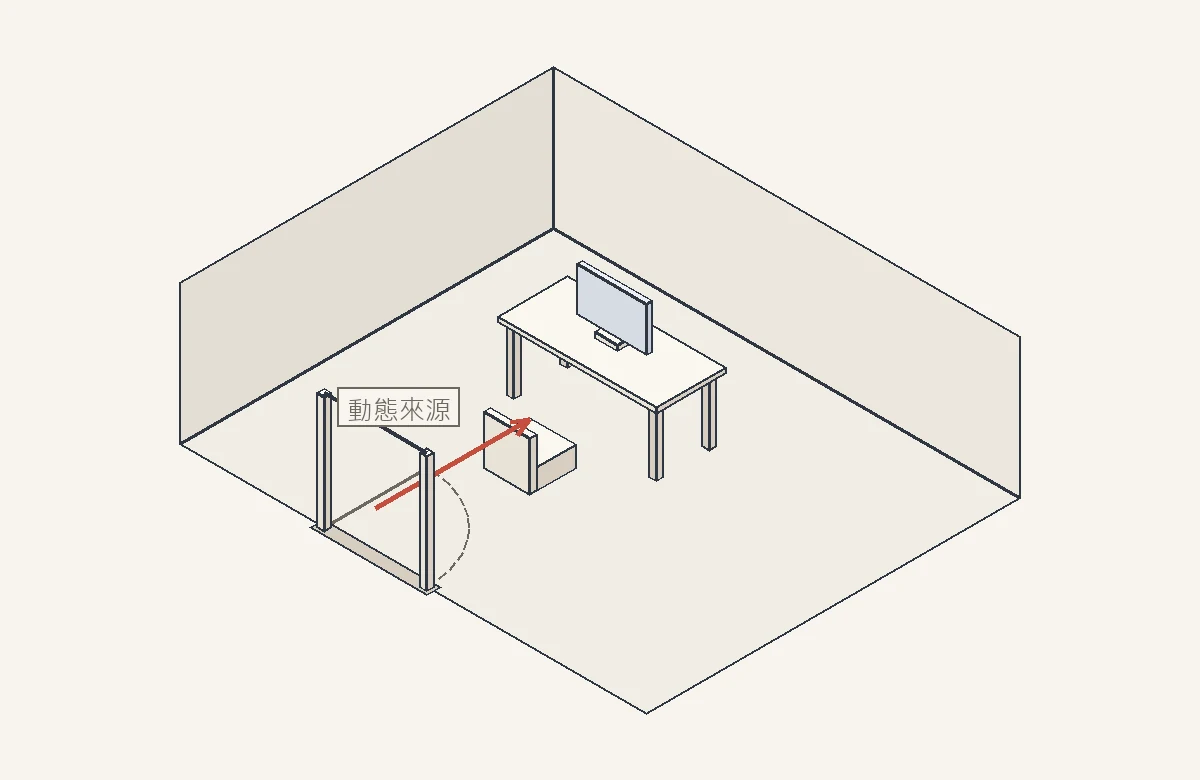
Sitting with your back to the door is a position many people instinctively resist. You may not be able to say why, but your body knows. The door is a source of movement: people come and go, there are sounds, there are changes in light, and you cannot see any of it.
You cannot see what happens at the doorway, and your attention keeps a share behind you without your noticing. You think you are concentrating, but you are in fact distracted on guard, and the drain is greater than you imagine. Cooking with your back to the doorway in the kitchen and a sofa with nothing behind it in the living room are the same response.
The adjustment is simple: turn the chair so the door falls diagonally ahead of you or to your side. If the space does not allow it, at least place a small mirror on the desk surface reflecting the direction of the doorway. The mirror need not be large; palm-sized is enough. The purpose is only to let your vision catch the movement and release the alertness. The mirror in the entrance hall is the opposite case: catching sight of outside the door the moment it opens instead makes a person pause.
I tried rotating my desk ninety degrees myself, and a colleague said it was less easy to lose focus in the afternoon. A single experience proves nothing, but the cost is low, and it is worth trying once yourself.
Facing a wall: when the gaze has no outlet, thinking gets blocked too
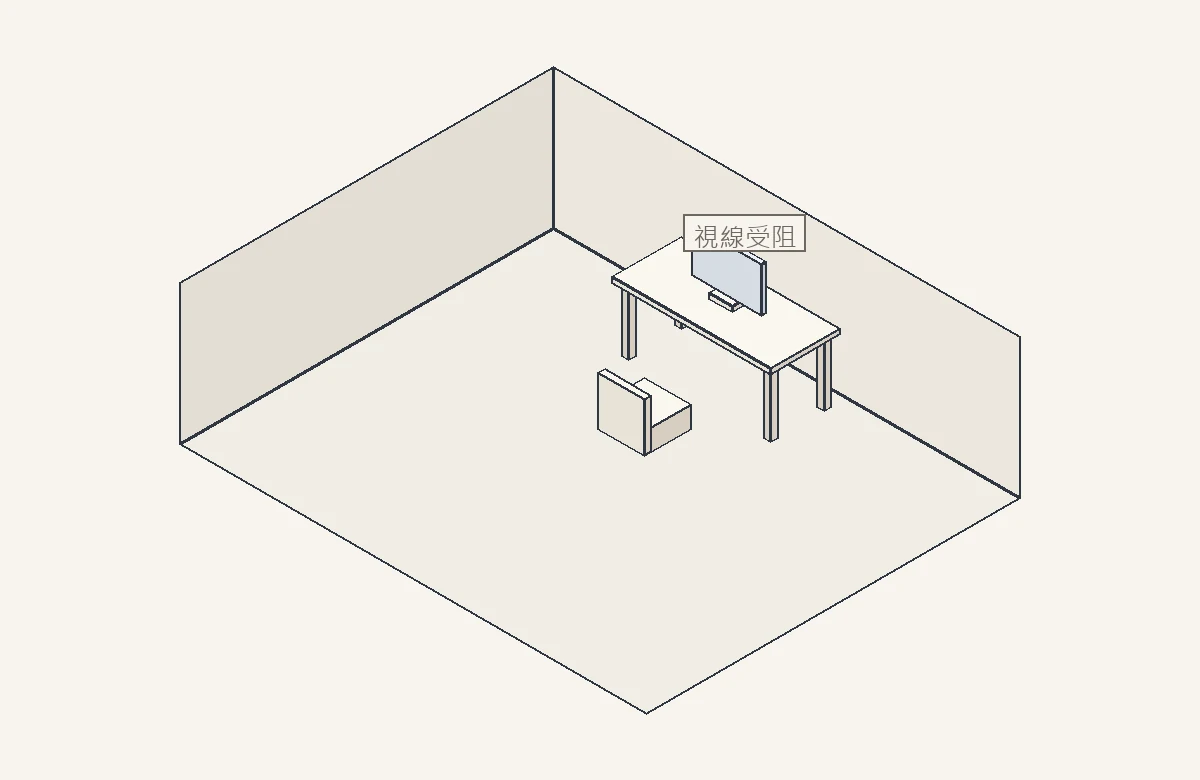
When you sit facing a wall, your line of sight reaches only a few dozen centimeters at most. The wall carries no information and no depth, so the eyes cannot find a distant point to rest on.
When the eyes stay focused at the same near distance for a long time, they tire more easily than when focus shifts between near and far. Facing a wall, the gaze has no distant point to land on; once tired, it starts to drift, and thinking tends to get stuck.
Adjusting the direction creates an outlet for the gaze. If the desk can only be placed against a wall, hang a painting with a sense of perspective on that wall, or put up a photo of distant mountains. The point is not decoration but giving the eyes a chance to project onto an imagined distance.
Another approach is to look up at something six meters away for twenty seconds every twenty minutes of work. Eye doctors call this the 20-20-20 rule, because the eyes get real rest during those twenty seconds.
Under a beam: the sense of pressure is not you overthinking it
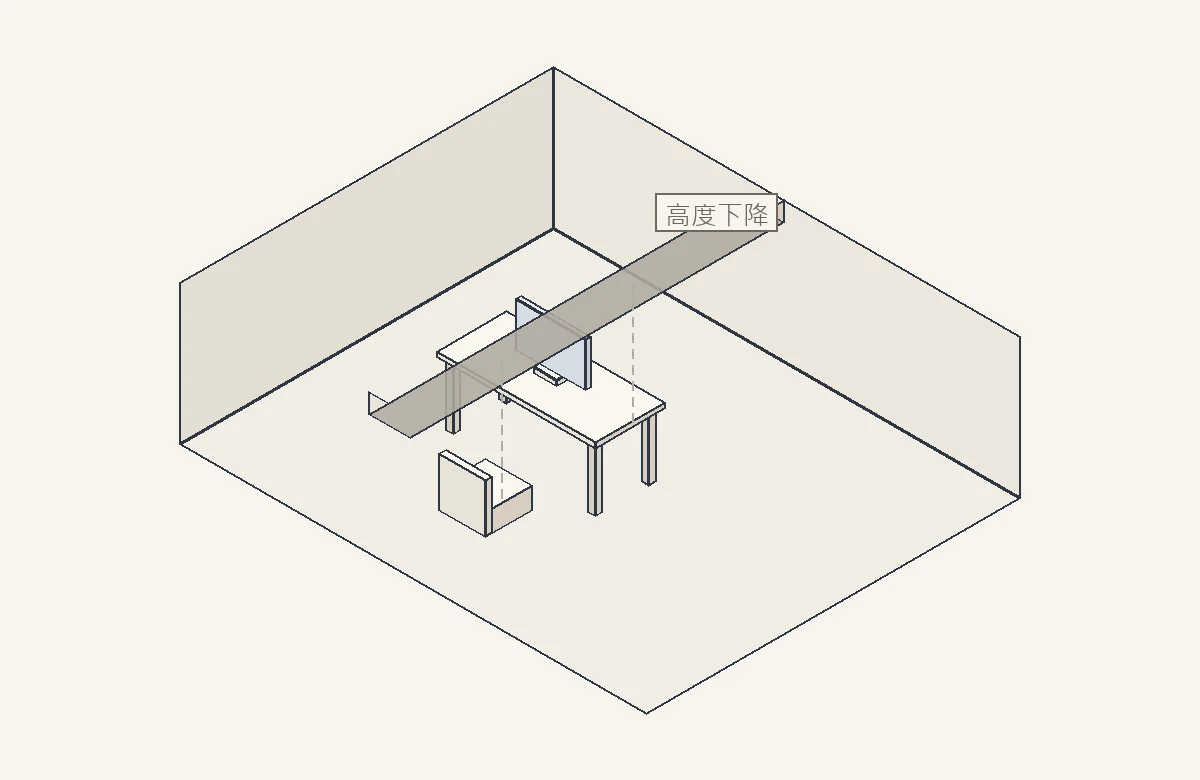
When a beam runs directly over your head, many people feel uncomfortable but cannot say why. Traditionally this is called a beam pressing on the head; broken down, it means the ceiling height suddenly drops, and the body reacts to the compression of the space above.
People are very sensitive to changes in the height above their heads. When a stretch of space is missing directly above the seat, and you see the underside of the beam whenever you look up, your posture will still shrink unconsciously even if you know you will not bump into it.
The most direct fix is to move the desk so the seat is not directly under the beam. If it cannot be moved, light the beam with indirect lighting to reduce the sinking feeling caused by shadow. Another way is to hang plants so the focus of the gaze shifts from the beam to the plants.
I once tried draping fabric in a curve under a beam, which visually dissolved the right-angle pressure, and sitting there did feel easier. A single experience proves nothing, but the cost is low.
Direction of light: when the eyes are lit up, focus is interrupted
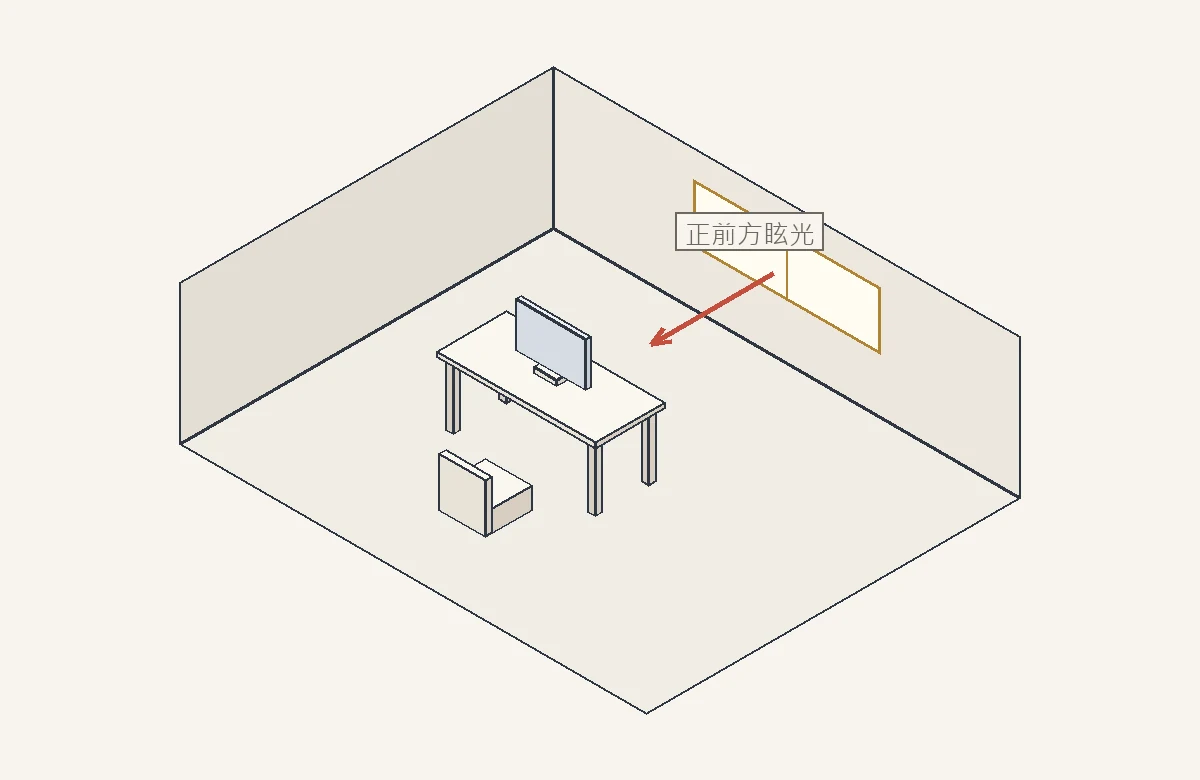
When light comes from straight ahead and shines directly into the eyes, it creates glare, and the gaze must constantly readjust between the bright light and the screen; the longer you sit, the more uncomfortable it gets. The position of the light source deserves attention before its brightness.
The correct approach is to let light come from the side, ideally the left (for right-handed people). That way the light is not blocked by the hand and does not shine straight into the eyes. If a window is directly in front, it creates strong backlight during the day; with screen reflections plus light hitting the eyes, it is normal not to last long.
Adjustment principle: the light source and the screen should be at a ninety-degree angle. If the window is directly in front, add blinds or a translucent sheer curtain to scatter the light. Place the desk lamp on the opposite side from your writing hand so the shadow does not block the paper.
There is one more often overlooked point: screen brightness should match the ambient light. If the room is too bright and the screen too dim, the eyes strain; the reverse is also true. This is not a placement issue, but it can make all the earlier adjustments pointless.
Do one thing before you start moving things
Before you sit down, do not rush to move the desk. First observe which part of the day you find it hardest to stay seated and which part you are most focused. Write these times down and compare them with your seat direction and changes in light.
You may find that the restlessness at three in the afternoon is actually caused by a change in the angle of light, not by something wrong with you. That solves half the confusion.
When adjusting, change only one variable at a time. Change the direction today, adjust the light tomorrow, deal with the pressure overhead the day after. If you change everything at once, you cannot tell which change actually worked, and it is easy to give up because too much has shifted.
Here is a question to leave you with: which aspect of your seat makes you most want to escape? Is it the anxiety of not being able to see the door, or the irritation of harsh light? The answer will point to where to start.
常見問題
問What is the effect of sitting with your desk facing away from the door?
The door is a source of movement: people come and go, there are sounds, there are changes in light, and you cannot see any of it. Your attention unconsciously keeps a portion behind you, constantly distracted and on guard, consuming more than you imagine.
問What should you do if your desk faces away from the door?
Turn the chair so the door falls to your diagonal front or side. If the space does not allow it, at least place a palm-sized mirror on the desk to reflect the direction of the door, letting your vision catch the movement.
問What is the problem with sitting with your desk facing a wall?
The farthest line of sight is only a few dozen centimeters; the wall has no information, no layers, and the eyes cannot find a distant point to rest on. Maintaining the same close focus for a long time is more tiring than having alternation between near and far.
問What is the effect of a desk under a beam?
When the height of the space suddenly drops, the body reacts to the compression of the space above. With a section of space missing directly above the seat, looking up brings the underside of the beam into view; even if you know you will not hit it, your posture still unconsciously shrinks.
問What is the problem with light coming from directly in front of the desk?
Light shining directly into the eyes creates glare, and your gaze must constantly adjust between the strong light and the screen; the longer you sit, the more uncomfortable it becomes. If the window is directly in front, it creates strong backlight during the day; with screen reflection plus light hitting the eyes, it is normal not to be able to sit for long.
問Where should the light source for a desk be placed?
Light should come from the side; for a right-handed person, from the left, so the light is not blocked by the hand and does not shine directly into the eyes. The light source and the screen should be at roughly ninety degrees; when the window is directly ahead, add blinds or a semi-transparent sheer curtain, and place the desk lamp on the opposite side from the writing hand.