Sofa placement: no support behind, facing the front door, TV backlit — three causes of not being able to sit long in the living room
KarmaSpace translation
Not sitting long in the living room usually comes down to one of three causes: the back of the sofa is a walkway or the main door, the sofa directly faces the main door, or the television directly faces the window and creates backlight. The order of handling is to first solve the lack of support behind, then offset the sightline from the main door, and finally deal with the light using curtains; move the existing furniture first, and only consider buying more if it is still not enough.
Many people have replaced the sofa, added cushions, and laid rugs, yet the living room is still not a place where they can sit for long. After ten minutes of sitting, they want to stand up. The problem is usually not the furniture itself, but three things: whether there is a solid wall behind, what the line of sight faces directly, and where the light on the television wall comes from.
All three of these can be measured or observed directly on site, without tearing down walls or buying anything new. Below, each one is broken down, and an adjustment order is given at the end.
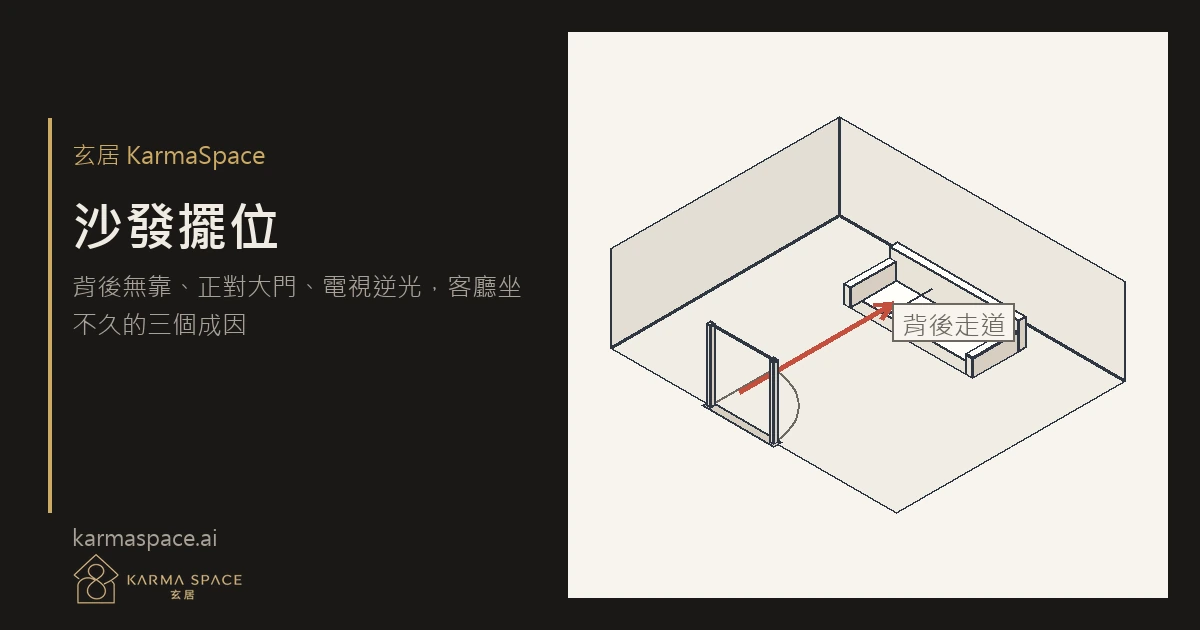
No support behind: part of the attention stays behind you
If behind the sofa is an open walkway, dining area, or main door, the seated person cannot confirm movement behind them from the corner of the eye. This can be verified on your own: have someone walk behind you once, and see whether you turn your head. Most people will.
This turning of the head is not neuroticism. When people cannot keep track of movement behind them, they periodically turn back to confirm. The number of times may not be many, but each turn interrupts what they are doing in the moment. You think you are sitting and resting, but in fact you have been distractedly on guard the whole time. Cooking with your back to the entrance in the kitchen is the same matter.
Feng Shui calls this position having no support. The traditional saying is that one needs a backing mountain, which translated means: the state behind you should be clear at a glance. A solid wall, a tall cabinet, or even a fixed floor-to-ceiling screen all meet this condition. Fabric curtains do not count, because movement behind a curtain remains unclear.
The test is simple. Sit on the sofa and turn your head to the greatest angle, and see how much of your rear view you can take in. The larger the range you cannot see, the more attention you leave behind you. The principle is similar for a beam overhead, except the direction changes from behind to above.
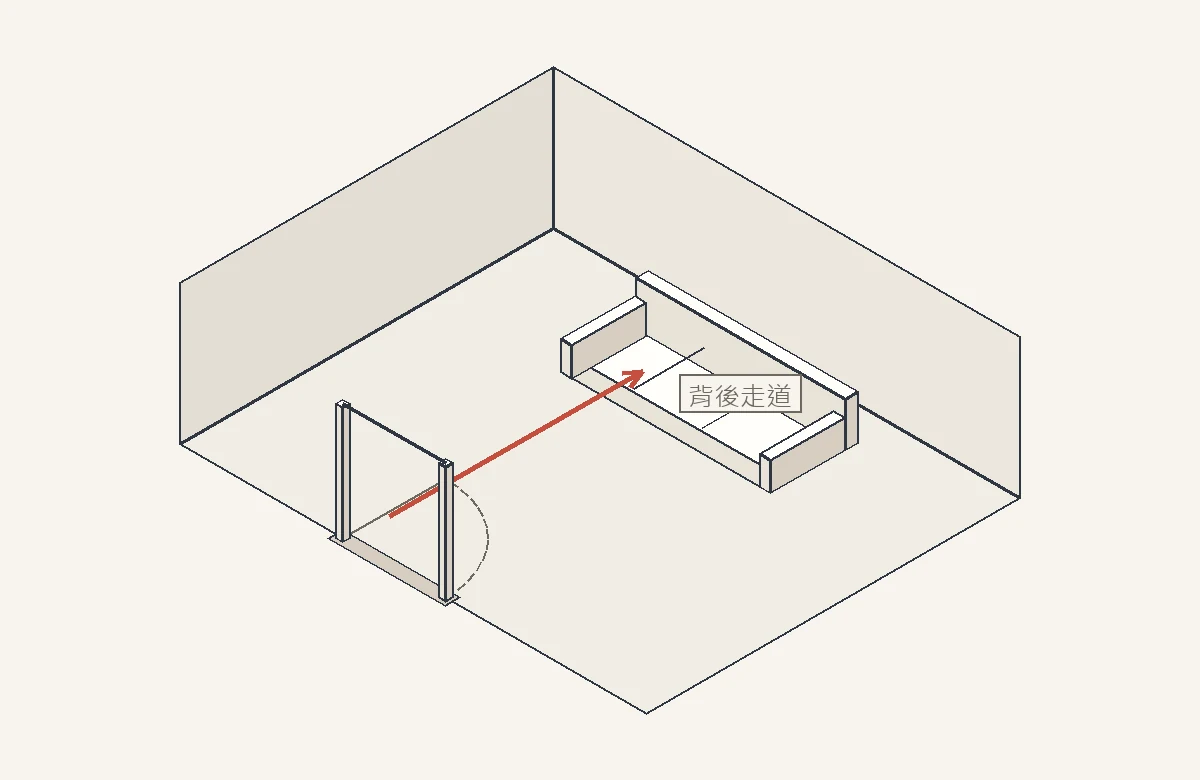
Facing the main door directly: the starting point of the line of sight overlaps with the starting point of the walking path
When the sofa faces the main door directly, the seated person will unexpectedly make eye contact with everyone who enters. This disturbance is different from having no support behind; no support behind is not knowing, while facing the main door directly is knowing too soon. Both make it impossible to relax.
The more practical issue is the flow of movement. The first things a person does on entering are take off shoes, put down bags, and close the door, and all of these actions are completed directly in front of the sofa. The person sitting is forced to take part in the entire process of every coming and going, even without wanting to. This motion originally belongs to the entrance hall; when the sofa directly faces the main door, it is as if the entrance hall has been extended right in front of you.
Feng Shui calls this configuration a clash. The way to handle it is not to move the sofa away, but to offset it. Add a low cabinet or a side table between the sofa and the main door, or turn the sofa forty-five degrees so that the starting point of the line of sight no longer overlaps with the starting point of the walking path.
If space constraints make turning impossible, a fallback approach is to place a piece of waist-high furniture between the main door and the sofa. It does not need to block the entire line of sight; it only needs to make the act of entering fall at the edge of your vision rather than in the center when you are seated.
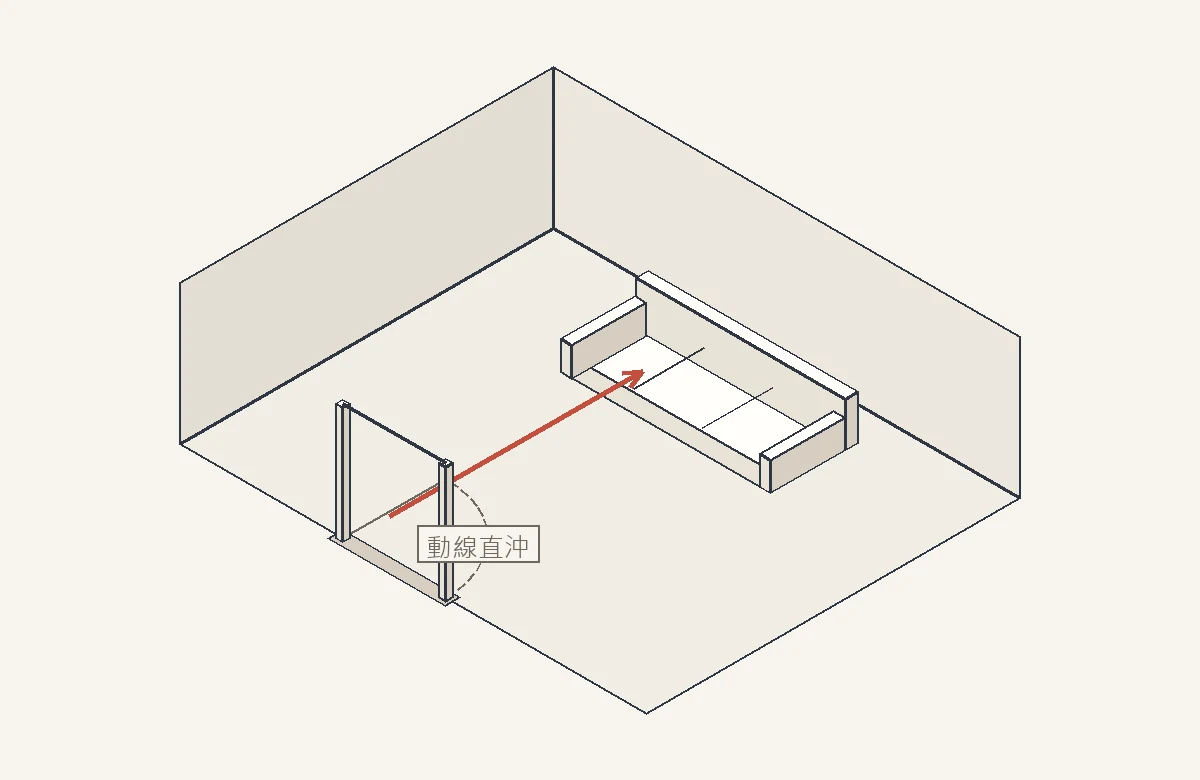
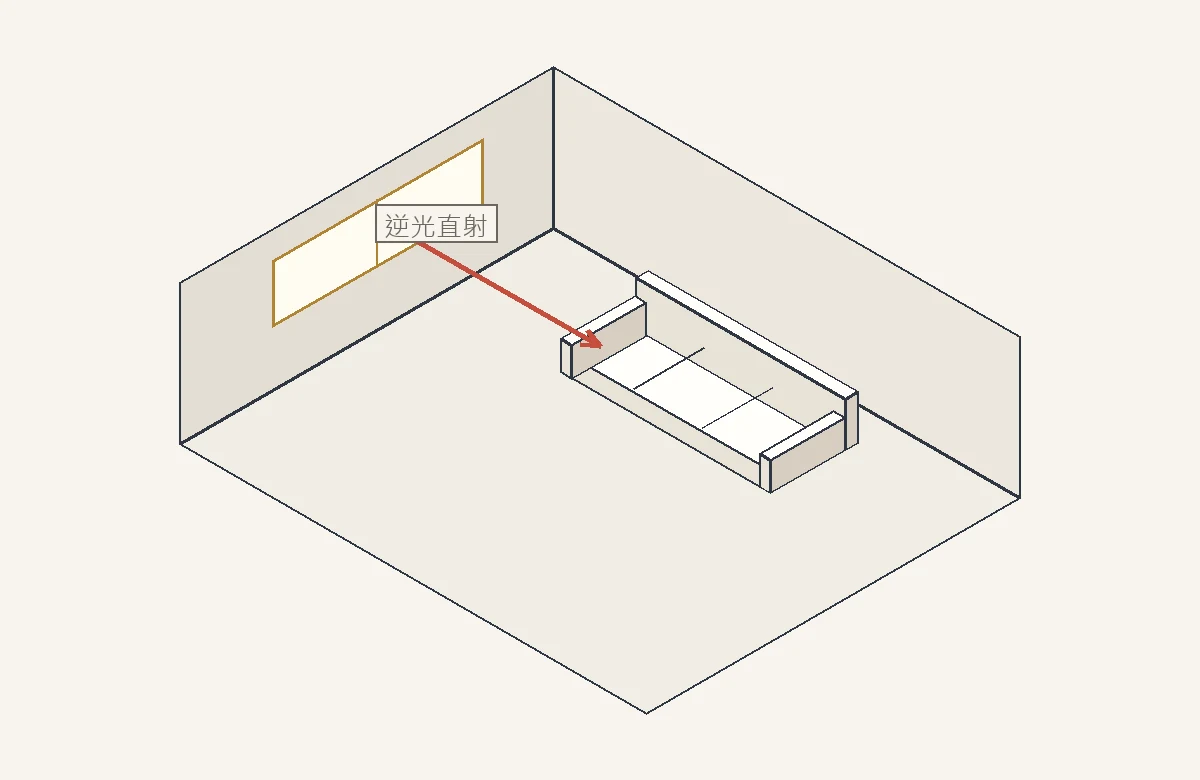
Television backlight: the relative position of the screen and the window
When the television directly faces the window, watching TV in the daytime means light from outside shines straight from behind the screen into your eyes. The screen itself is not bright enough, the picture is unclear, and the eyes must constantly adjust between bright and dark. The direction of light at a desk follows the same principle.
This problem is most obvious in the afternoon. The sun is low, light enters the room horizontally, and lands right behind the television. What the seated person sees is not the picture, but a halo of light around it.
There are three directions for handling this. First, turn the television so that the screen and the window form a right angle. Second, add a sheer curtain to the window to reduce the intensity of light entering the room while keeping daylight. Third, concentrate television watching at night and do not force it during the day.
These three approaches have no ranking of better or worse; it depends on how often you watch television during the day. If you do not watch at all during the day, neither the first nor the second needs to be done.
The three causes often appear at the same time
Living rooms in older apartments are mostly rectangular, with the main door at one end and the balcony at the other. The sofa leans against one side wall and the television against the opposite wall, so behind the sofa is the walkway, directly in front is the main door, and the television faces the balcony directly. All three causes arrive at once.
Under this layout, adjusting only one of them brings limited improvement. Turn the sofa forty-five degrees, place a low cabinet between the main door and the sofa, and add a sheer curtain to the balcony; do all three together, and the feeling of sitting in the living room will be noticeably different.
If you want to try only one first, it is recommended to deal with having no support behind first. This one has the most direct effect on not being able to sit for long, and it is also the easiest to verify. Move a high-backed chair behind the sofa, sit down and feel it for five minutes, and the difference is usually immediately clear.
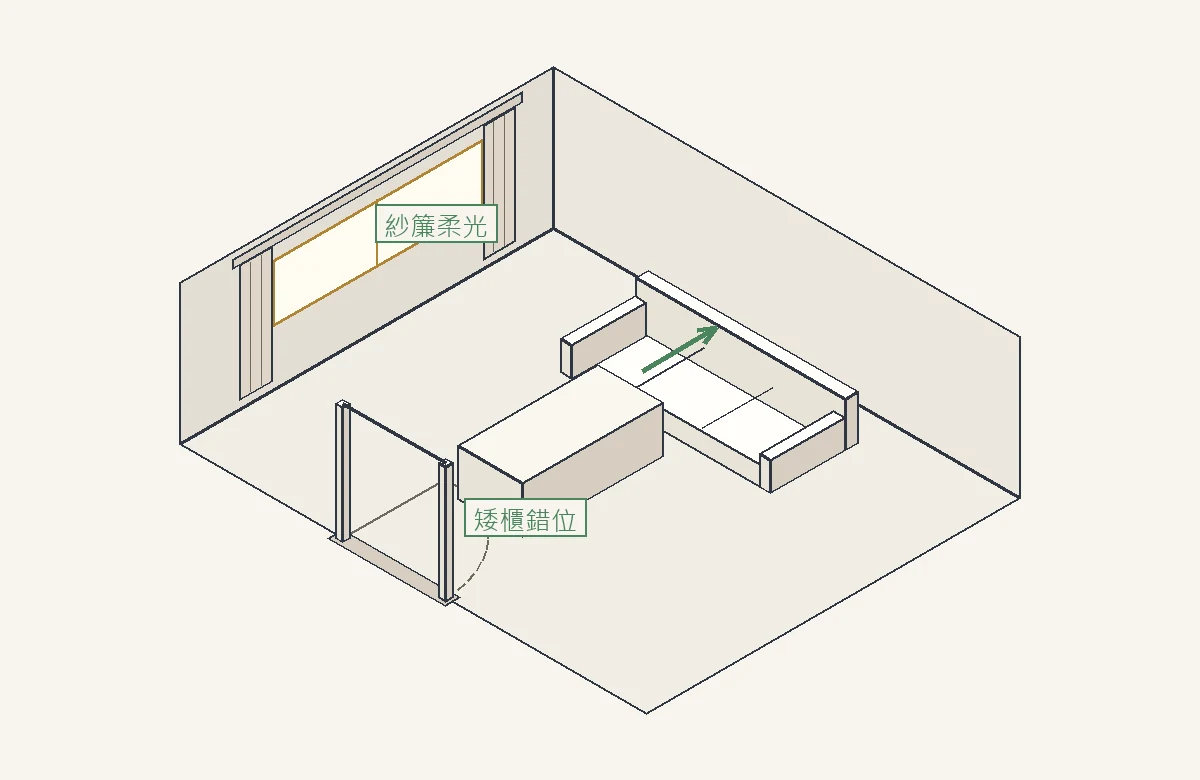
Adjustment order: measure first, then move, and only buy last
Step one: sit on the sofa and use your phone to take a full frontal photo. The photo will show how much of your rear view you have, where the main door is in the frame, and the relative angle of the television and the window. This photo is more reliable than your immediate feeling, because feelings adapt, but photos do not.
Step two: move only the furniture you already have. Turn the sofa, shift the low cabinet, pull the curtain halfway. There is no need to do it all at once; change only one item each time, sit for ten minutes, and note which item makes the most obvious difference.
Step three: if interference remains after rearranging and cannot be resolved, then consider buying something new. The order of purchase is: deal with what is behind you first, then the line of sight, and only lastly the lighting. Lighting problems can usually be solved with curtains, so there is no need to replace the television.
There is one question I do not yet have an answer to. Even with no support behind them, some people are completely unaffected and can sit still for three hours. Where the difference lies, whether it is habit or a different sensitivity to space, I currently do not have enough observations to judge. If you have tried adjusting, I would welcome hearing your results.
常見問題
問What happens when there is no solid wall behind the sofa?
The seated person cannot confirm movement behind them from the corner of the eye, so they periodically turn their head to check. Each turn interrupts whatever they are doing, keeping them constantly distracted and on guard.
問What is the problem when the sofa faces the main door directly?
The seated person will unexpectedly make eye contact with everyone who enters, forced to take part in every coming and going. The entering person takes off shoes, sets down bags, and closes the door entirely in front of the sofa.
問What happens when the television faces the window while watching TV?
When watching television during the day, light from outside shines directly into the eyes from behind the screen; the screen itself is not bright enough and the picture is unclear. This is most obvious in the afternoon, when the sun is low and light enters the room horizontally, landing right behind the television.
問What can be done when there is no support behind the sofa?
A solid wall, a tall cabinet, or even a fixed floor-to-ceiling screen all meet the condition of having a state behind you that is clear at a glance. Fabric curtains do not count, because movement behind a curtain remains unclear.
問How can a sofa facing the main door be adjusted?
Add a low cabinet or a side table between the sofa and the main door, or turn the sofa forty-five degrees so that the starting point of the line of sight no longer overlaps with the starting point of the walking path. If turning is not possible, place a piece of waist-high furniture between the main door and the sofa.