Entryway observations: what you see when the door opens decides the first thirty seconds of being home
KarmaSpace translation
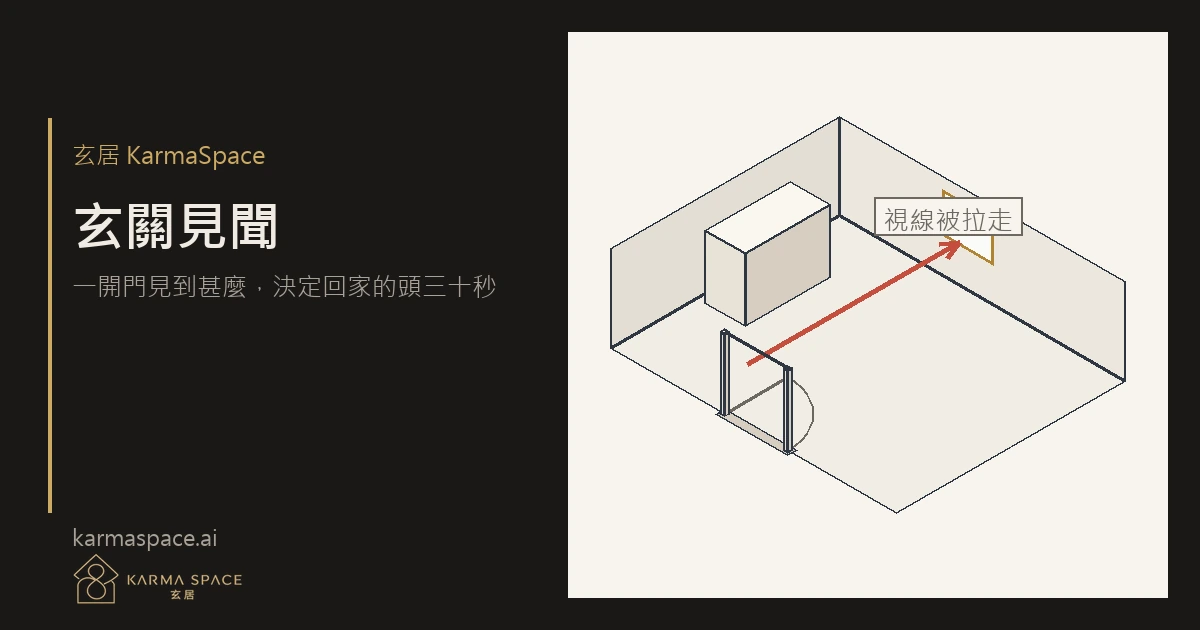
What you see when the door opens affects whether you can relax in the first thirty seconds after coming in. The three most common problems are: a mirror directly facing the main door, a shoe cabinet blocking the way, and no light in the entrance hall. None of the three requires renovation: move the mirror or change its angle, keep the passage at least ninety centimeters wide, and add a motion-sensor light by the door.
The lock turns, the door pushes inward, and before you have even stepped inside, your gaze has already landed. The entryway is the last transition on the way home, and the first signal that your body is switching from outdoors to indoors. This moment is short, about thirty seconds, but in those thirty seconds, everything your eyes sweep across is quietly telling you: is this safe, does this belong to me, is this messy.
Most people do not linger in the entryway, because the entryway is usually narrow, dark, and piled with shoes. Precisely because they do not want to linger, problems are more easily overlooked. You think it is just a few extra shoes, but in fact, the first thing you see every day when you come in, you are dealing with that pile of shoes, that mirror, that shadow. Once used to it, you assume it is normal.
Here we discuss the three most common entryway situations: seeing a mirror as soon as the door opens, a shoe cabinet blocking the way, and an entryway with no light. None of these requires knocking down walls or changing doors, and none requires buying expensive furniture, but each one is worth a second look.
Seeing a mirror as soon as the door opens: your gaze is pulled away, and your body pauses with it
Mirrors are placed in the entryway mostly to check your appearance before going out. But at the moment you come in, the mirror does not reflect you; it reflects the corridor behind you, the half-open door, the pile of unopened parcels. The moment your gaze enters and is pulled elsewhere by the mirror, your body unconsciously pauses for half a step, checking whether there is anything in that image to watch for.
This pause is very brief, so brief you may not notice it. But pausing that moment every time you come in, the accumulated feeling is: coming home always requires a beat, always feels like something needs checking. You think it is just work being tiring, but in fact your gaze has been led along by the mirror the whole time. The way that beam above the bed in the bedroom occupies attention is very similar.
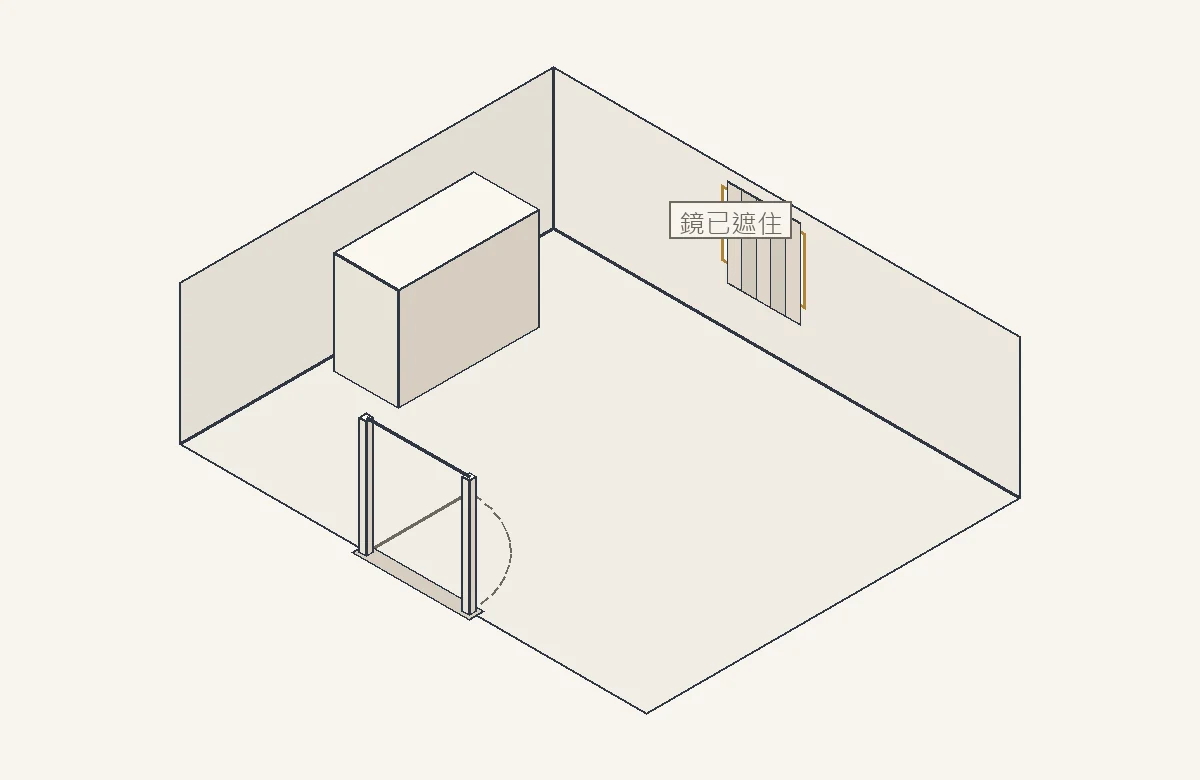
The most direct solution: move the mirror away, to the side wall of the corridor or the inner side of a wardrobe door. If the mirror is fixed to the wall and cannot be removed, cover it with a cloth or a poster, and only uncover it before going out. This way, when you come in, your gaze falls directly on the living room light source or the dining table arrangement, your body does not need to first confirm the image in the mirror, and your feet naturally step forward.
If you are used to looking in the mirror in the entryway, then change the angle of the mirror so it reflects the wall and not the door. Before going out you can still see yourself, but when you come in the mirror no longer immediately reflects the scene outside the door. Turn the angle fifteen degrees, and the effect is already different.
Shoe cabinet blocking the way: the flow is obstructed, and irritation rises from the soles of your feet
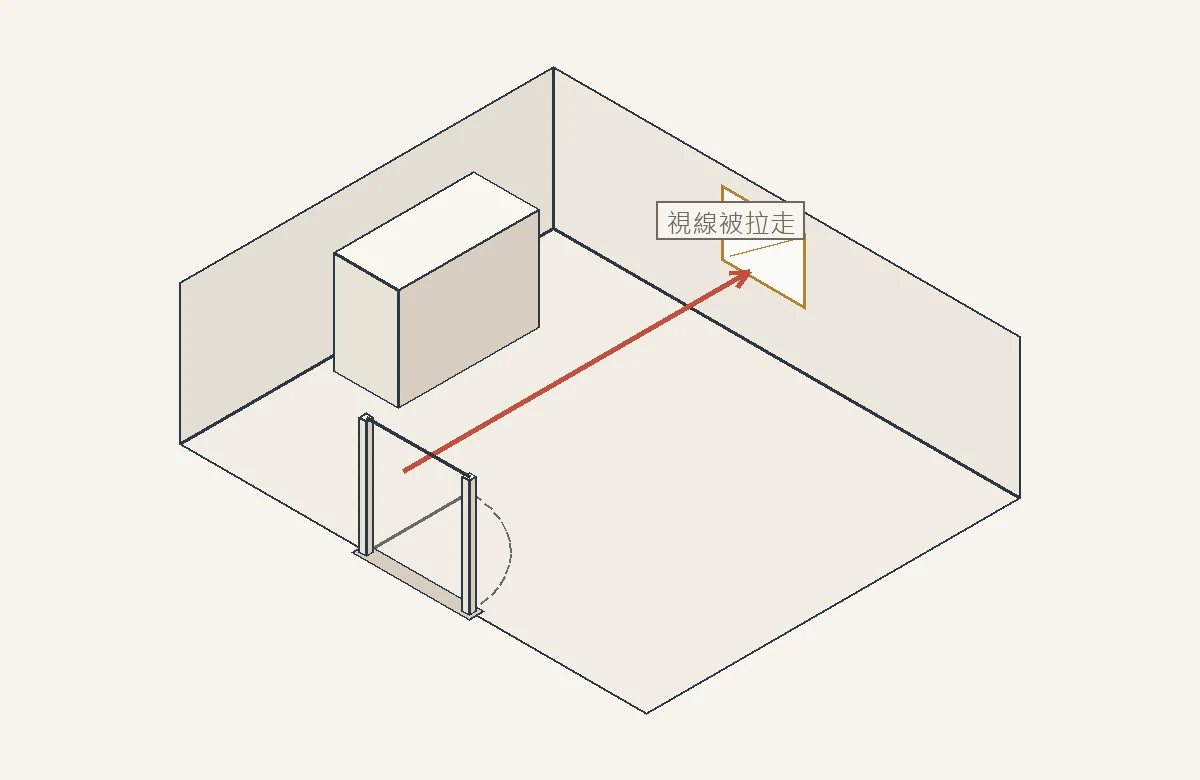
There are two common types of shoe cabinets in entryways: one placed against the wall, and one placed across the middle of the path. Most against-the-wall ones are fine; most across-the-middle ones are there to separate the living room from the entryway, or out of a desire for more storage. But every time you come in, you have to turn sideways, lift your feet, and go around the corner of the cabinet before you can reach the living room. This movement repeats every day; you may not curse out loud, but your body remembers.
What a shoe cabinet blocking the way truly affects is not feng shui but the flow of movement. When the flow is obstructed, the body needs extra calculation: whether to step with the left foot or the right first, how far the cabinet corner is from the wall, whether what you are carrying will bump into it. These calculations do not take much attention, but added up they become a subtle drain. You will find that coming home you always need a deep breath before you feel loosened. The other end of the flow is usually the living room; when the sofa faces the main door, this whole entering motion falls entirely in front of the person sitting there.
The solution does not require moving the shoe cabinet, only making the path straight. Measure the distance between the cabinet and the wall; if it is less than sixty centimeters, a person walking through will naturally turn sideways. Push the cabinet toward the wall, or switch to a narrower shoe cabinet, keeping the passage at least ninety centimeters. This width is enough for an adult to walk straight through without dodging.
If the shoe cabinet truly cannot be moved, for example if it is a custom fixed cabinet, then clear the top of the cabinet. Do not pile keys, letters, or clutter on it; let your gaze pass over the top of the cabinet to see the living room light. When the line of sight is clear, the body feels the path has no end, and walking feels smoother. Placing a small lamp or a potted plant on top of the cabinet makes the effect even more obvious.
No light in the entryway: darkness keeps your guard up
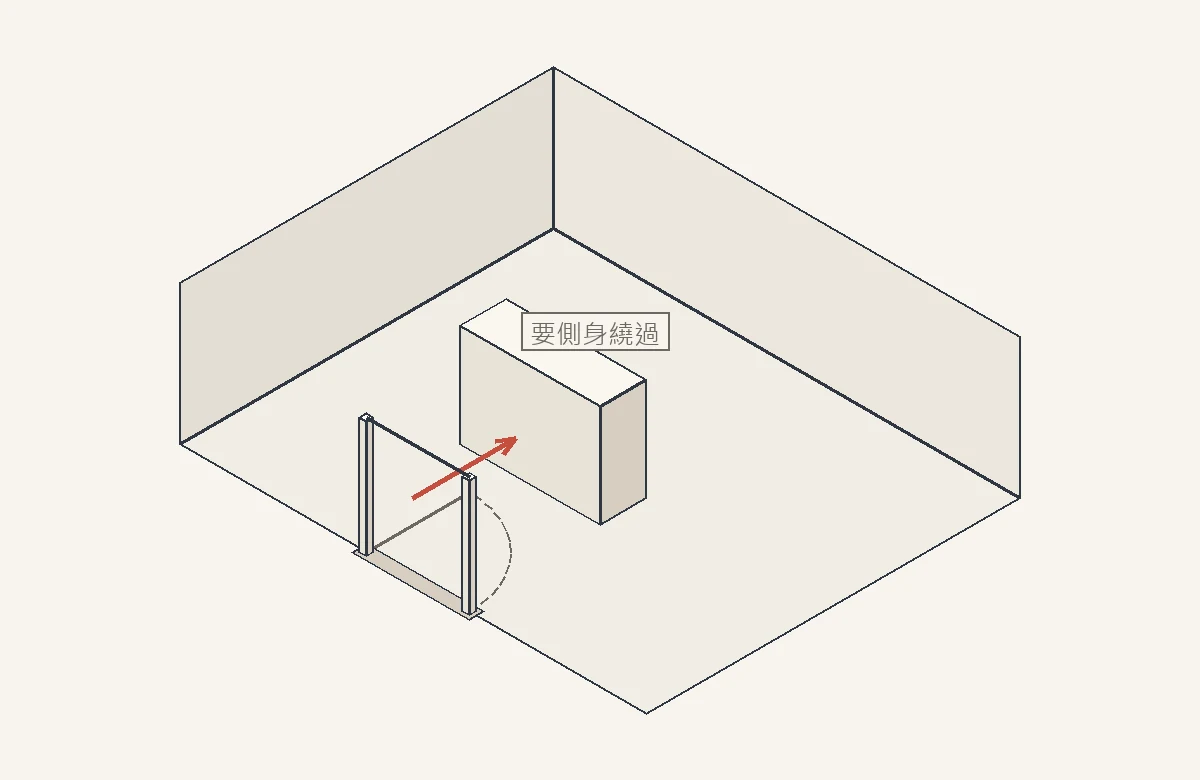
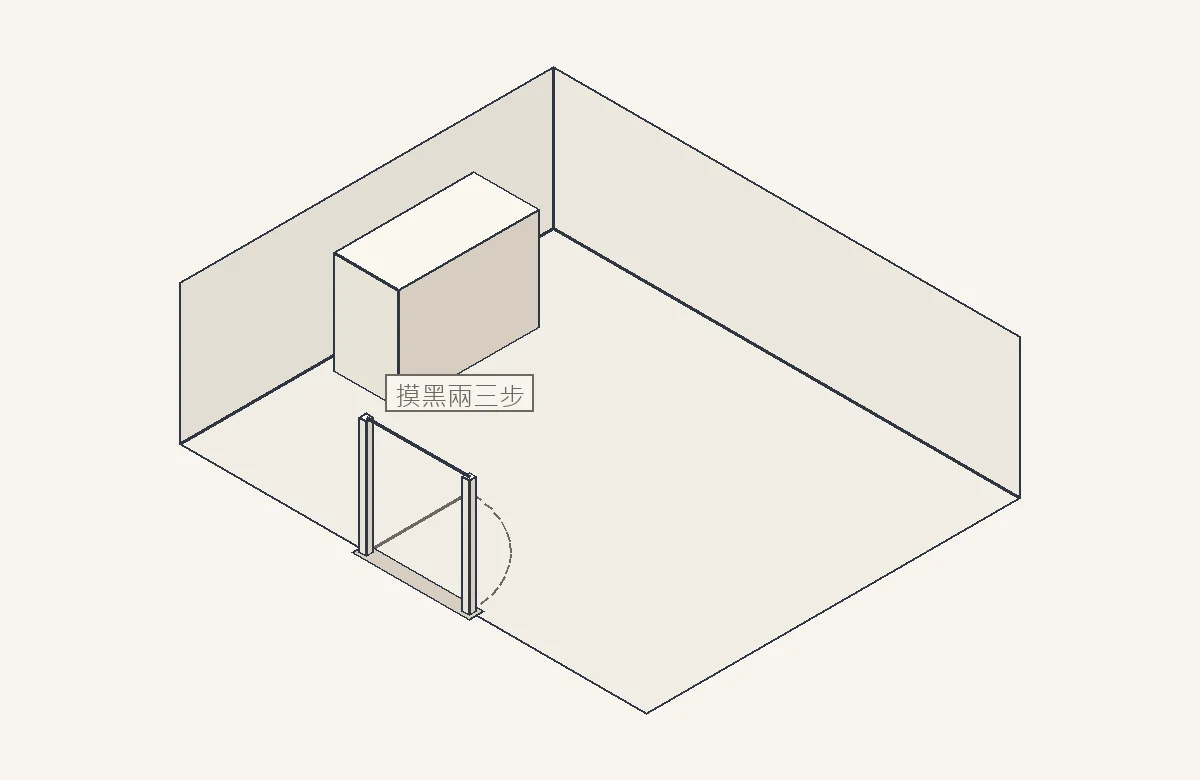
Many homes have no ceiling light in the entryway, with the switch inside the living room, so on entering you must feel your way two or three steps in the dark before finding the switch. This dark period is not long, but you can notice how you walk: your steps slow, one hand reaches out to feel the wall, and the other hand does not set down what it is carrying first. Only after seeing clearly do your movements return to normal.
The effect of darkness at the entrance lies not in the darkness itself but in not being able to see clearly in the dark. When you cannot see clearly, you unconsciously allocate attention to checking rather than relaxing. You may not notice it, but in the first few minutes after coming in, you always glance once more at the corners and listen once more for sounds, confirming there is nothing unusual. This is not timidity; it is a normal visual response. The distraction when a desk faces away from the doorway is the same response.
The simplest solution: add a motion-sensor light or a small always-on light in the entryway. No renovation needed, no wiring needed; use a rechargeable or battery-powered LED light strip, stick it on the side of the shoe cabinet or at the base of the wall, and the light comes on when you enter. The light does not need to be strong, just enough to illuminate the floor and the area by the door.
If you do not want to install a light, then make sure the first thing you see on entering is not a dark area. Open the door between the entryway and the living room so the living room light spills through. Or place a movable standing mirror beside the front door to reflect living room light into the entryway. A mirror here is not taboo; the key is that it serves the light, not that it reflects the space outside the door.
The real function of the first thirty seconds: a switch for changing states
In the first thirty seconds after entering, your body is doing one thing: switching from the outside rhythm to the inside rhythm. The outside rhythm is fast, multitasking, needing to respond to others at any time; the inside rhythm is slow, singular, able to belong only to yourself. The switch needs a signal, and this signal mostly comes from the first image your eyes see.
If the first thing you see is the corridor reflected in the mirror, the signal is still outside; if the first thing you see is the corner of a blocking cabinet, the signal is dodge again; if the first thing you see is darkness, the signal is be on guard first. None of these three signals is good for switching, so when you get home, your body is inside but your mind is still outside. You sit down to rest, but your mind will not stop.
Arrange the entryway into a simple picture: a light illuminating the floor, a straight unobstructed passage, a line of sight that can extend to the living room or balcony. This picture does not need to be beautiful, only clear. Clear means that at a glance your eyes understand: there is nothing here that needs handling.
You do not need to believe any metaphysical theory, only observe yourself. Tonight when you come in, notice: what is the first thing you see, does your body pause, do your feet dodge, does your hand first feel the wall for the light switch. Those three movements are your entryway speaking.
Solutions without renovation: three things you can do tonight
These three things can be done tonight when you get home, with no tools and no money spent. Only if you want to assess the main door direction by annual flying stars do you need to measure; before measuring, first confirm whether the degrees were measured in reverse.
First, clear the entryway floor. Put shoes into the cabinet, close the cabinet doors, lay the mat flat. Let the first step you take on entering be on a flat, stable surface, with nothing to dodge.
Second, cover or turn the mirror. Use a cloth, a poster, or a hanging curtain so that your gaze on entering does not directly hit the mirror surface. If the mirror is fixed to the wall, apply a frosted sticker, and the effect is the same.
Third, find a light. If the entryway has no light, buy a rechargeable motion-sensor light, stick it by the door or on the side of the cabinet, and it lights up automatically when you enter. If there is a light but it is too dim, change to a brighter bulb, or move the switch to the door.
After doing these three things, you do not need to do anything else. The entryway does not need any auspicious objects, does not need talismans, does not need the door direction changed. What it needs is only for your eyes, at the moment you enter, to see a clear, stable picture that requires no guard. This picture is a gift you give yourself once a day.
常見問題
問What is the effect of an entryway mirror facing the front door?
The moment you step in, the mirror reflects the corridor behind you, the half-open door and the unopened parcels; your gaze is pulled elsewhere, and your body unconsciously pauses half a step to confirm the picture. Pausing like that every time you come home adds up to a feeling that you always have to hesitate at the door, always sensing something needs checking.
問What if the entryway mirror cannot be moved?
You can cover it with a cloth or a poster and uncover it only before going out; if the mirror is fixed to the wall, apply a frosted sticker for the same effect. You can also change the angle of the mirror so it reflects the wall rather than the door; you can still see yourself before leaving, but it no longer reflects the scene outside the door the moment you come in.
問What if the shoe cabinet blocks the entryway flow?
First measure the distance between the cabinet and the wall. If it is less than sixty centimeters, people will naturally turn sideways to pass; push the cabinet toward the wall, or replace it with a narrower one, keeping the passage at least ninety centimeters. If the shoe cabinet cannot be moved, clear the top of it and do not pile up keys, letters or clutter, so the gaze can pass over the top and see the light from the living room.
問What is the effect of having no light in the entryway?
If you have to feel your way two or three steps in the dark before finding the switch, then when you cannot see clearly, your attention is unconsciously given to checking rather than relaxing, and for the first few minutes after coming in you always glance at the corners and listen a little harder. The fix is to add a motion-sensor light or a small always-on light in the entryway, using a rechargeable or battery LED strip stuck to the side of the shoe cabinet or the base of the wall, so the light comes on when you enter.
問Can a mirror be placed in the entryway?
Yes, the key is that it serves the light, not that it reflects the space outside the door. If you do not want to install a light, make sure the first thing you see on entering is not a dark area: open the door between the entryway and the living room so the living room light spills through, or place a movable standing mirror beside the front door to reflect living room light into the entryway.
問What should be done when the door opens onto the corner of a shoe cabinet?
First measure the distance between the cabinet and the wall; when it is less than sixty centimeters, a person will naturally turn sideways to pass. Push the cabinet against the wall or switch to a narrower shoe cabinet so the passage stays at least ninety centimeters wide; if it is a fixed cabinet, clear the top so the gaze can pass over it to see the living room.