How can post-disaster memorial rites leave a community memory? Ritual, inscriptions and historical sources seen through a Hong Kong lecture
KarmaSpace translation
One lecture discussing Hong Kong memorial rites through documents, archives and oral accounts
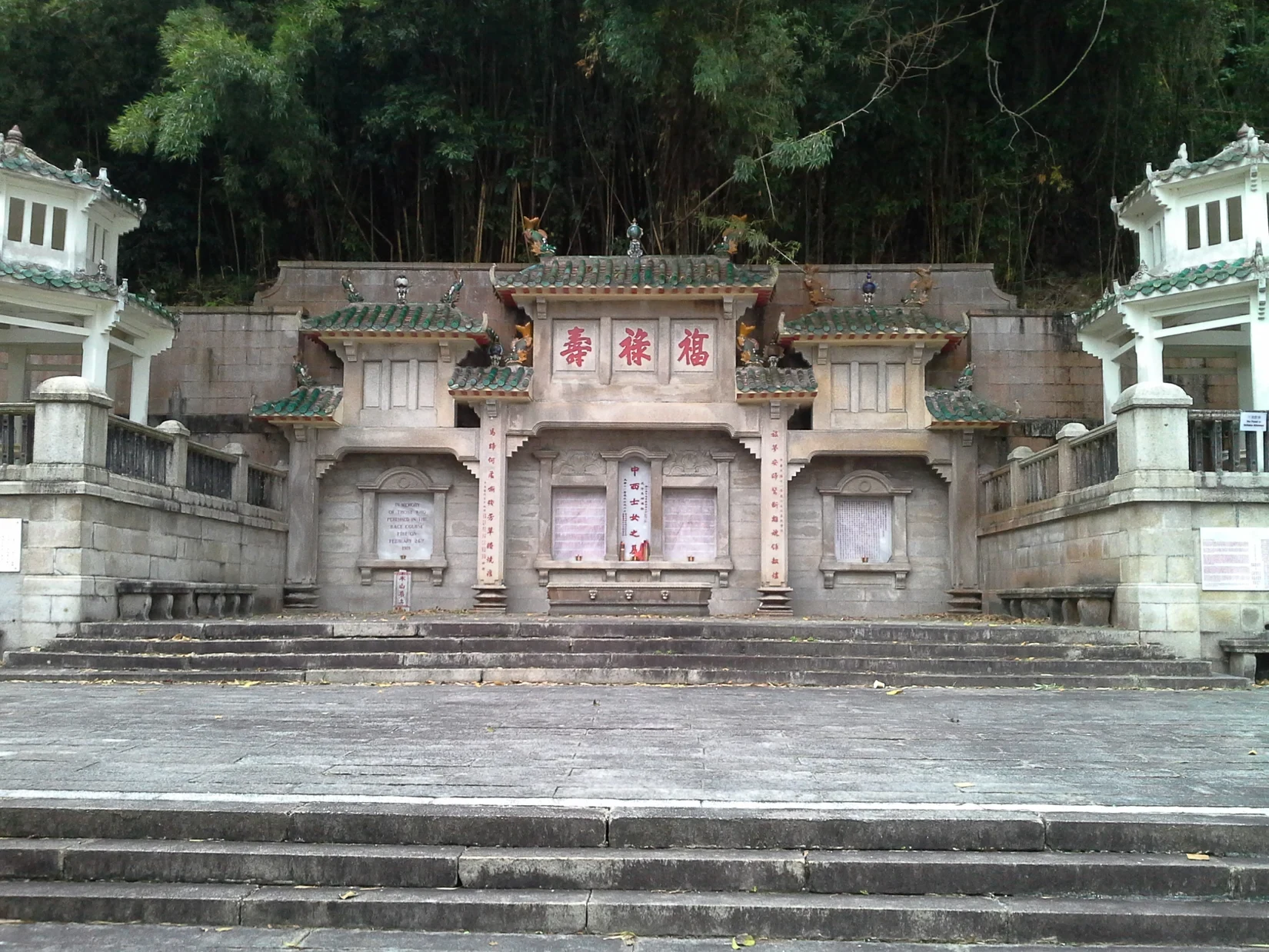
Racecourse Fire Memorial in So Kon Po. Photographed on 2016-2-21. Photo: John Cruel, Wikimedia Commons, CC BY-SA 4.0.
On 11-16, Tung Wah Group of Hospitals published an event review confirming that the lecture "Ritual Relief: Disasters and Hong Kong Traditional Memorial Rites", co-organised by the Group and Ching Cham Hong Kong, was held on 11-13 at the Viva MM2 Cafe. According to the organisers, Dr Wong King-chung, Senior Conservation Manager of the Conservancy Association, used documents, archives and oral interviews as materials to discuss, through historical topics such as epidemics, typhoons, fires and droughts, how communities mourn the dead, express grief and pray for peace. [Sources 1, 2]
These three kinds of material each have their uses. Institutional records from the time can explain who was responsible for allocating land and raising funds; inscriptions let readers see how those who erected them described the disaster; and oral interviews can add how later participants understood the tradition. The Racecourse Fire Memorial in So Kon Po is used below as an extended case. The public review of the lecture did not list the cases discussed item by item, so this article attributes this example to historical materials consulted by the editorial team.
From relief in 1918 to the building of the cemetery in 1922, what was recorded?
On 1918-2-26, a fire broke out at the Happy Valley racecourse during the annual races. The Antiquities and Monuments Office records that Tung Wah Hospital took part in relief and aftermath work after the disaster, and that the government allocated land at Coffee Garden in So Kon Po for burying the victims. Tung Wah Hospital later solicited designs for a memorial, adopted Ho Heung's plan, and raised construction funds from the public. The cemetery was completed in 1922. This process shows, in the three aspects of land allocation, design and fundraising, what the government, Tung Wah Hospital and donors each did. [Sources 3, 5, 6]
Tung Wah Group of Hospitals records that the hospital also organised a jiao ceremony at the time to mourn the dead. This ritual and the cemetery project were recorded separately. On 2015-10-23, the memorial was listed as a declared monument. When reading this history, the date of the fire, the date the cemetery was completed and the date of the monument listing can be kept separate, to avoid grouping the three events in the same year. [Sources 5, 6]
Looking at the gateway along the stone steps, what do the inscriptions and the architecture each explain?
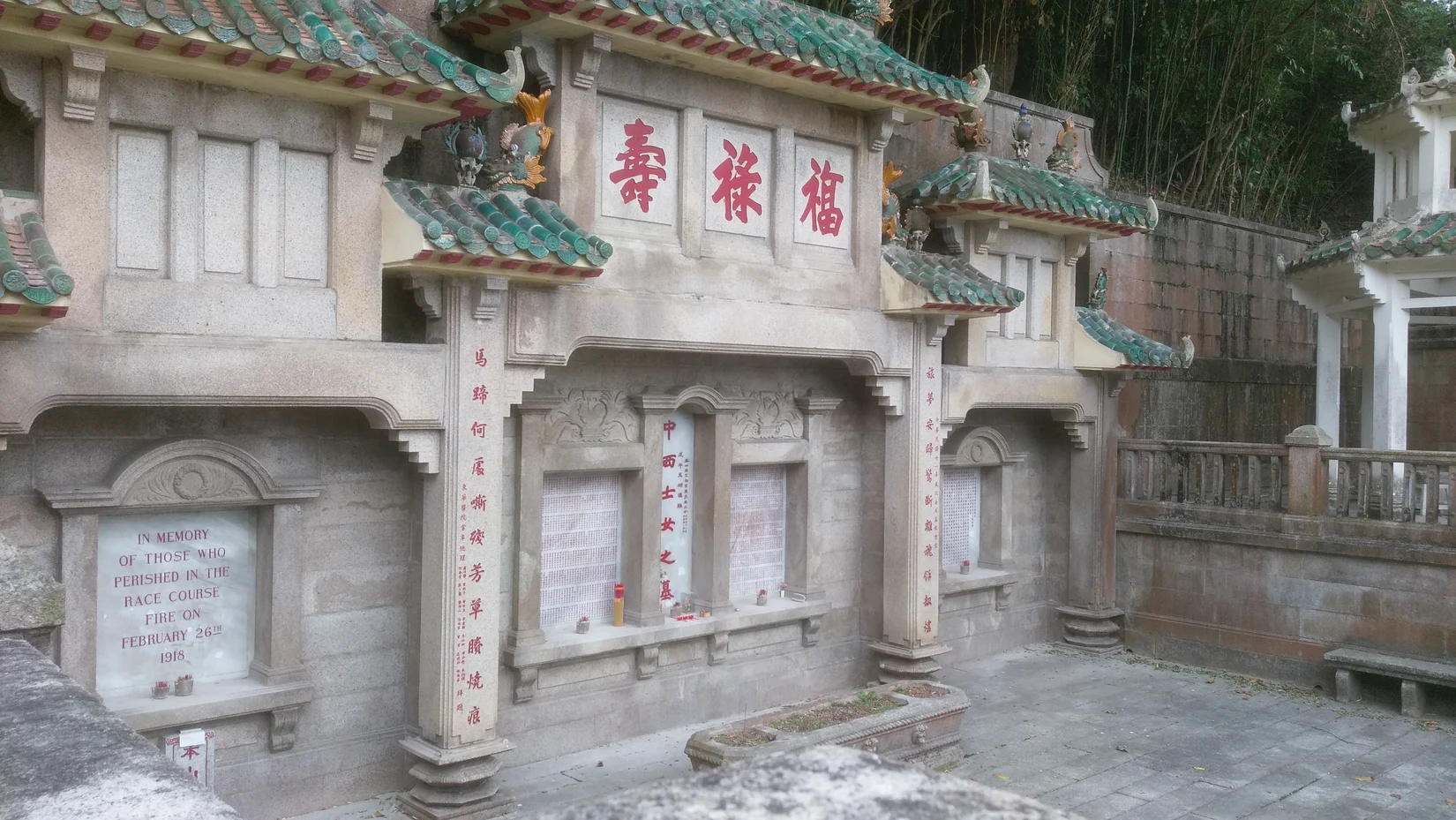
The whole complex is built in tiers along the So Kon Po hillside. According to the Antiquities and Monuments Office, the lowest tier has a pair of incense burners, the middle tier is the memorial gateway, and the upper tier has pavilions on both sides, with the tiers connected by granite steps. The gateway's green glazed tiles, ceramic ridge and Western-style stone niches stand side by side. The central gravestone, the inscriptions on either side and the stone slabs carved with names also let visitors read, from different positions, the purpose of this cemetery. [Sources 3, 5]
You can first use an overall photo to identify the stone steps, gateway and pavilions, then use close-up photos to look at the "Fu, Lu, Shou" above the gateway and the Chinese and English inscriptions. If you want to make your own reading notes, you can record which tier each component is on, which direction it faces, and for whom the text was written. This preserves the context of a memorial site better than excerpting a single couplet. [Sources 3, 5]
The inscription mentions feng shui; how can we check which site selection it refers to?
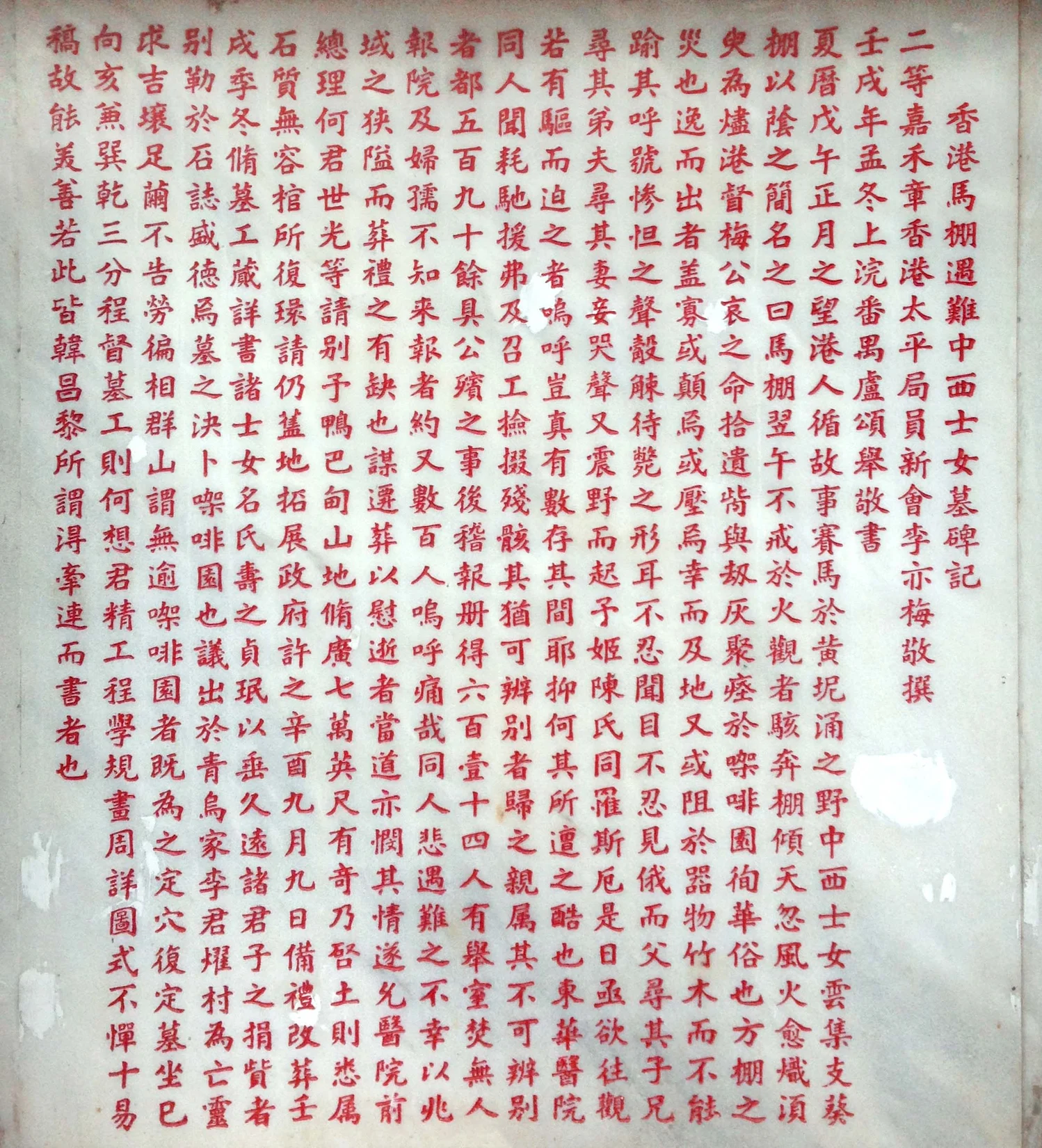
In the Chinese inscription, when describing the selection of the burial site, it mentions the "Qingwu school" and "fixing the acupoint," and also records the terms used for the orientation of the grave. This is text that can be checked against the stele face, showing how the compiler recorded the site-selection process of that year. The Antiquities and Monuments Office describes the monument as seen today as facing roughly northwest, toward the Happy Valley Racecourse. Tung Wah Group of Hospitals also records that the monument was later relocated to its current site and re-erected due to district development. [Sources 3, 6, and photograph of the Chinese inscription]
Therefore, when reading a certain orientation on the stele, one should first ask whether it records the original grave, a reburial, or the monument. To compare it with the current site, plans or maps from that year are also needed, and it must be established whether the object measured was the grave, the stone stele, or the archway. Neither the orientation seen today nor the site-selection terms in the inscription can be used to infer the cause of the 1918 fire. The available materials are also insufficient to identify a specific feng shui school.
How do Ching Ming grave-sweeping and the rites of the Hungry Ghost Festival leave different memories in the same place?
The Antiquities and Monuments Office records that Tung Wah Group of Hospitals sends staff to sweep the graves during Ching Ming, while the Chiu Chow Kung Wo Tong holds the traditional rite of inviting lonely spirits nearby during the Hungry Ghost Festival. The former is an institution visiting the cemetery to mourn at the appointed season; the latter is the Chiu Chow community making offerings to the unremembered dead during the festival. The Leisure and Cultural Services Department's intangible cultural heritage materials also list Hungry Ghost Festival traditions of different communities in Hong Kong, and the organisers and procedures may vary from place to place. [Sources 3, 4]
When recording these customs, rather than writing vaguely that "people make offerings," it is better to state clearly who attends at which festival, which organisation or recorder provided the practice, and which part is the participants' own explanation of their beliefs. To see how another Hong Kong historic site carries the history of worship and community mutual aid, see Kwong Fook Tsz Jigong Folk Beliefs Exhibition.
Want to read the inscription on site? What should be done before setting out and after arriving?
The monument is located on the hillside above the Hong Kong Stadium in So Kon Po. Before visiting, check Tung Wah Group of Hospitals' opening information and note the stone steps and any venue notices for the day. After arriving, view the overall layout from a safe passage, first take a wide shot showing the location of the inscription, then photograph details according to venue guidelines. If people are in the middle of grave-sweeping or offerings, give way first and respect their privacy. [Sources 5, 6]
If the inscription text is to be used in an article, notes can be divided into three parts: the original text that can be clearly read, background that can be verified from official materials, and one's own interpretation. When characters are unclear, leave a blank and then look for a clearer photograph or a reliable transcription; do not fill in characters based on a feeling for the language. This also makes it easier for readers to go back and verify.
Common questions
QSome say offerings can avert disaster; what can historical materials prove?
Documents can record who mourned or prayed with what rites, and how other aftermath work was carried out. The causes of disasters and the effects of protective measures must be checked against the corresponding investigation, engineering, and rescue records.
QAre the Hungry Ghost Festival and Ching Ming grave-sweeping the same activity?
In the So Kon Po example, the Antiquities and Monuments Office records practices of different seasons and communities. When citing them, the organiser, date, and activity should be stated clearly.
QDoes the monument facing the racecourse mean there was a specific feng shui design?
The Chinese inscription preserves the geomantic terms used in site selection at the time, while the heritage materials explain the approximate orientation of the existing monument. Because the monument was relocated, judging the relationship between the two or identifying a school would still require the plans from that year, the object referred to in the inscription, and relocation records.
QCan the monument still be visited now?
Check Tung Wah Group of Hospitals' opening information for the day first. The site is on a hillside; when reading the inscription, follow on-site guidelines and leave space for those sweeping graves.
Sources
- Tung Wah Group of Hospitals | Review of Hong Kong Traditional Sacrificial Rites Talk · Published on 2026-11-16; the original page does not list the time of publication. The talk was held on 2026-11-13. For verifying co-organisers, venue, speakers, and the scope of the talk.
- Tung Wah Group of Hospitals | Ritual Relief Lecture Preview · Published on 2026-10-23. Cross-check the event name and co-organisers; actual event details come from the event review.
- Antiquities and Monuments Office | Coffee Garden Ghost Festival and Race Course Fire Memorial · Published on 2023-8-31. Used for independent verification of the 1918 fire, the completion of the cemetery in 1922, and the commemorative customs that followed.
- Leisure and Cultural Services Department | Updates to the Hong Kong Intangible Cultural Heritage Inventory and Representative List · Announced on 2024-12-6. Cross-check the inclusion of the Yu Lan Festival in Hong Kong's local Representative List and the practices of different communities.
- Antiquities and Monuments Office | Declared Monument Information on the Race Course Fire Memorial · Standing reference. Cross-check the fire date, post-fire land allocation, fundraising, plans, and the three-tier platform.
- Tung Wah Group of Hospitals | History and Opening Information of the Race Course Fire Memorial · Standing reference. Cross-check the memorial rite held that year, the completion of the cemetery, the relocation and re-erection of the memorial at its current site, and its designation as a declared monument on 2015-10-23.
- Photo of the memorial's front facade | John Cruel · Taken on 2016-02-21. Wikimedia Commons, CC BY-SA 4.0. Preview versions have been resized and converted to WebP.
- CC BY-SA 4.0 licence · Applies to the photo of the memorial's front facade.
- Close-up photo of the memorial archway | Anthony Ivanoff · Taken on 2018-02-24. Wikimedia Commons, CC0. Preview versions have been resized and converted to WebP.
- CC0 licence · Applies to the close-up photo of the memorial archway.
- Close-up photo of the Chinese inscription | SalisburyCentric · Taken on 2021-08-24. Wikimedia Commons, CC BY 4.0. Preview versions have been resized and converted to WebP.
- CC BY 4.0 license terms · Applies to close-up photographs of Chinese inscriptions.