Kwong Fuk Tsz Jigong Belief Exhibition: From Dailong Lane in Wan Chai to Sheung Wan, how does a single deity statue preserve neighborhood memory?
KarmaSpace translation
What opened at Kwong Fuk Tsz in 11?
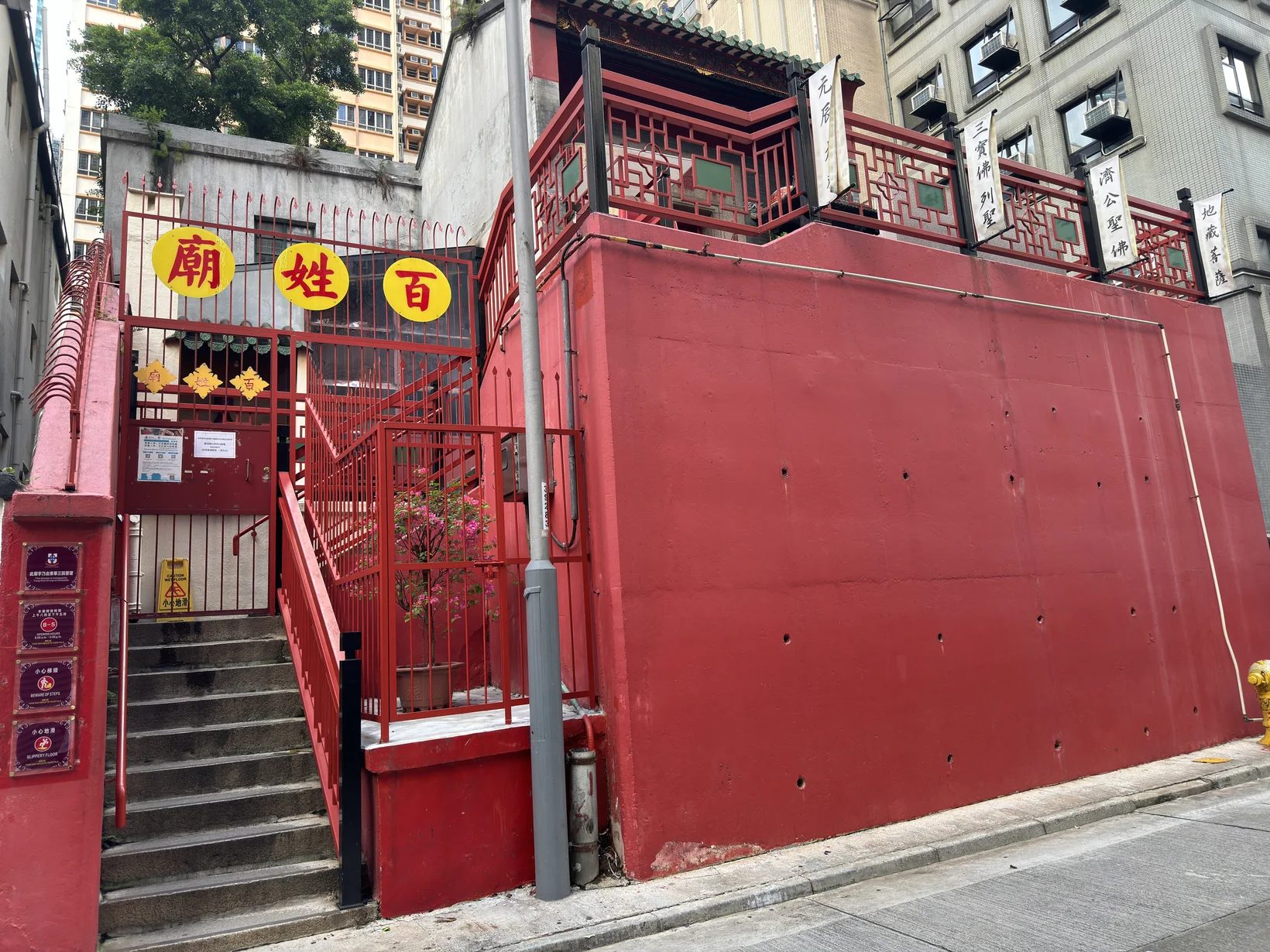
The cover is the exterior of Kwong Fuk Tsz photographed on 2024-8-1. Photo: LN9267 (Wikimedia Commons, CC BY-SA 4.0, thumbnail and converted to WebP).
The Tung Wah Group of Hospitals announced on 11-14 that it, together with Tung Tseng Yuen Buddhist Association and the International Jigong Culture Association, co-organized a Jigong Birthday master-honoring ceremony that day at Kwong Fuk Tsz on Tai Ping Shan Street, Sheung Wan, and unveiled the Jigong belief exhibition. The organizers recorded segments including offerings and honoring the master; the exhibition uses display panels to introduce the history of Hong Kong's Jigong temples, how the belief is expressed in daily life, and overseas exchanges. According to the announcement, the exhibition is open to the public and runs until 12-13. [Source 1]
This event is a different session from the carnival held in Victoria Park from 10-23 to 25. The palanquin performance in Victoria Park can be approached through its procession, route, and story; the exhibition at Kwong Fuk Tsz prompts the question: where did the statue in the temple come from, and why does it remain here? [Sources 1, 5]
Why does a temple in Sheung Wan have a Jigong statue from Wan Chai?
Kwong Fuk Tsz is also known as Pak Sing Temple. The Antiquities and Monuments Office records separately the 1856 when the first-generation temple was built and the 1895 when the existing building was reconstructed; the government declared Kwong Fuk Tsz a monument on 2026-1-30. In its early years the temple housed ancestral tablets of deceased Chinese laborers and also provided care for those without support. The Jigong worship is one layer of the monument's history today. [Sources 2, 3]
The Antiquities and Monuments Office records that the Jigong Temple on Dailong Lane in Wan Chai had to be demolished for redevelopment, and the original Jigong statue was eventually moved to Kwong Fuk Tsz. This migration history links the two districts: after the original site disappeared, the statue could continue to be worshipped elsewhere. When reading the display panels, note which old site, which objects, and which reception arrangements they describe; where the information is left blank, there is no need to fill in the story yourself. [Source 2]
Honoring the master, making wishes, and feng shui are different questions
From the perspective of belief custom, honoring the master can be understood as devotees expressing reverence through ritual, and also letting later generations know how the group passes down its rites. The exhibition allows visitors of different faiths to learn about these practices through dates, locations, and objects. If a display panel records a neighborhood's past prayers for peace, it first of all explains how the people involved at the time understood and coped with hardship.
The courtyard and roof-ridge decorations of Kwong Fuk Tsz can be observed architecturally, but the temple's location and the statue's migration are not in themselves enough to prove which feng shui method was used at the time, nor can they be used to calculate visitors' fortunes. If you want to understand the meaning of a certain orientation, first find plans, inscriptions, or management explanations with a date and source, then distinguish design evidence from later oral interpretations. [Sources 2, 3]
How to prepare before visiting?
Kwong Fuk Tsz is located at 40 Tai Ping Shan Street, Sheung Wan. The temple service hours listed on the management's page are 8 a.m. to 5 p.m.; the event announcement does not list separate daily exhibition hours. Before setting out, you can confirm with the temple whether the exhibition can be viewed that day and what the arrangements are for entry, exit, and photography. If worshippers are present, give way first and follow on-site instructions. [Sources 1, 4]
If you want to compare how the same belief custom is presented in a park and in a temple, you can first read Victoria Park Jigong Culture Carnival review, then compare it with the Kwong Fuk Tsz display panels: which item is a factual record, which is legend, and which is the exhibition curator's interpretation?
Common questions
QAre the exhibition and the master-honoring ceremony on 11-14 in the same time period?
The ceremony and unveiling were held on month 11, day 14. The organisers announced that the exhibition continues until month 12, day 13; daily visiting arrangements are subject to confirmation by the temple.
QWas Kwong Fuk Temple built in 1856 or in 1895?
1856 marks the completion of the first-generation temple, and 1895 marks the reconstruction of the surviving building. The two years correspond to different construction phases.
QCan the relocation of the deity statue to Sheung Wan be interpreted as feng shui site selection?
The Antiquities and Monuments Office has documented the reconstruction at the original Wan Chai site and the relocation of the deity statue for worship, but these records do not establish that the relocation followed any feng shui method.
Sources
- Tung Wah Group of Hospitals: Kwong Fuk Temple Jigong Birthday Teacher Honouring Ceremony and Exhibition Opening · Announcement and opening: 2026-11-14 (Hong Kong time; no publication time given); the announcement states the exhibition runs until 2026-12-13. Verify the co-organisers, ceremony and exhibition panel content.
- Antiquities and Monuments Office: The History and Architecture of Kwong Fuk Temple · Originally published: 2025-04-03. Verify the initial construction in 1856, the reconstruction in 1895, the relocation of the Jigong statue from Tai Lung Lane for worship, and the temple's early uses.
- Antiquities and Monuments Office: Kwong Fuk Temple Declared a Monument · Issued and gazetted: 2026-01-30; issue time 11:00 (Hong Kong time).
- Tung Wah Group of Hospitals: Kwong Fuk Temple Address and Service Hours · No publication date indicated. The page lists the temple's service hours.
- Hong Kong 01: Preview of the October Jigong Cultural Festival at Victoria Park · Published: 2026-10-16 11:32; event: 2026-10-23 to 25. For distinguishing the October carnival from the November Kwong Fuk Temple exhibition; not as corroboration that the November event took place.
- Kwong Fuk Temple cover photo | LN9267 (Wikimedia Commons) · Taken on 2024-8-1. The version on this site has been resized and converted, and is likewise shared under CC BY-SA 4.0.
- Creative Commons Attribution-ShareAlike 4.0 International Licence · Applies to the Kwong Fuk Temple cover photo.