What are the taboos about mirror placement? Start with reflections, privacy and where the mirror is used
KarmaSpace translation
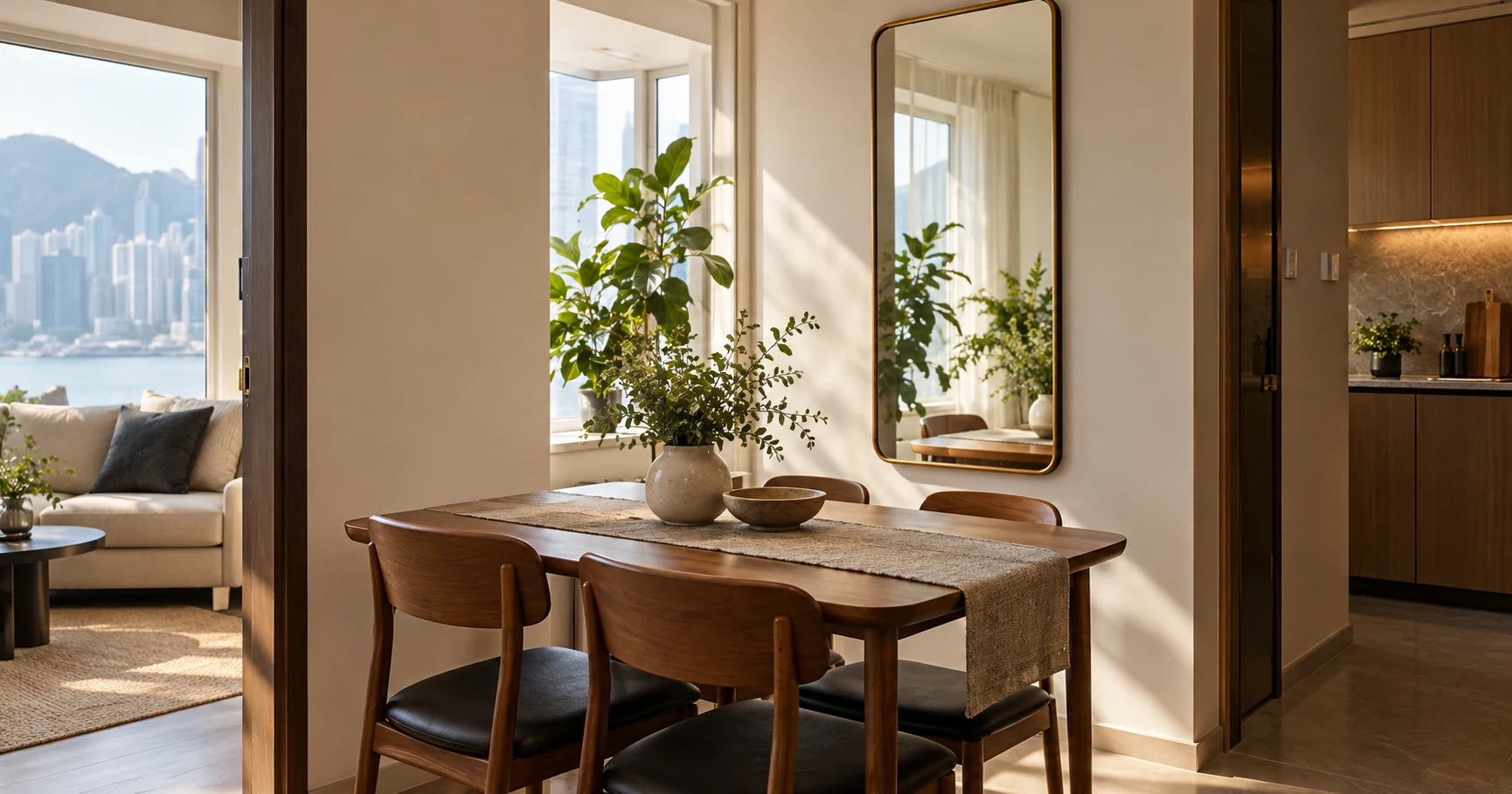
The same mirror shows different things depending on where it is placed
A mirror makes it easy to check your appearance, but it can also bring the area outside the door, clutter, or lighting into sightlines that were previously unseen. When discussing mirror feng shui, do not start by looking only at a single "mirror facing the door" line on a floor plan; instead, go to the places where you actually stand, sit, and lie down, and see what the mirror reflects.
Traditionally there are taboos such as a mirror facing the bed or a mirror facing the door, and different schools explain them inconsistently. These cultural sayings cannot directly prove that they will cause financial loss or affect relationships. This article first sets out items you can check at home, so that any decision about moving a mirror has a concrete basis.
Mirror facing the main door: look at privacy first; there is no need to remove it in every case
Stand in the public corridor, inside the door, and at your usual seat, and look at the mirror's image once from each. Could a bed or documents that are not directly in line with the entrance be seen through the reflection? If so, adjusting the mirror's angle or position, or adding a screen inside the door, addresses the problem more directly than simply changing the colour of the frame.
If the mirror is used only to check your clothing before going out, does not let outsiders see private items, and does not cause glare, it can be kept according to actual need. There is no need to remove every useful fitting just because of the phrase "reflecting wealth." For entrance arrangements, see First Glance at the Entrance.
Mirror facing the bed: check from the perspective of lying down
Standing at the foot of the bed in daylight and lying on the pillow at night give different views of the mirror. From your usual sleeping position, notice whether it reflects corridor lights, outdoor signs, or the movement of other household members. If the image feels distracting to you, you can first try a suitable movable screen for a few nights, or adjust the mirror's direction, before deciding whether it is worth moving.
This comparison only identifies a person's preference for how light and images are used; it cannot prove that a mirror will bring about any particular fate-calculation outcome, nor should persistent sleep problems all be attributed to a mirror. If a wardrobe mirror door cannot be removed, first consider blocking methods permitted by the original design, and avoid making your own modifications that could make the door or glass unstable.
Dining room and living room: what gets enlarged is the scene, not income
Hanging a mirror in the dining room is often described as 'doubling one's food fortune.' This can be treated as a traditional symbolic meaning, but it does not mean income will double as a result. In practice, a mirror reflects the dining table together with the background; if what appears in the mirror is mainly clutter or harsh light bulbs, what increases may only be the visual complexity.
Before choosing a position, first sit in each frequently used chair and try the view, and also check again at night with the lights on. Do not decide based only on daytime staging photos. If the living room also has TV glare, you can look at the relationship between sofa, TV and glare together, to avoid solving one spot while creating another.
Four-item checklist before moving a mirror
One, write down the purpose clearly: dressing, washing up, or decoration. Two, confirm who will look at it and from what height: an adult standing, sitting in a chair, and viewing from bed may be completely different. Three, examine the reflection sources separately by day and night. Four, check the fixing method, mirror edges, and nearby walking space; safety issues cannot be skipped for feng shui reasons.
If you only want the space to look larger, first try a smaller mirror or a temporary position to see the effect, then decide whether to buy a large mirror. A mirror does not increase the actual walking area, nor can it replace window ventilation; a reflection that looks like an extra space and a place that can actually be used are two different things.
Further reading and content notes
For other bedroom placements, see common bed problems; if you rent and cannot alter a mirror door, see the order of adjustments without renovation.
This article was produced with AI assistance, and the accompanying images are AI illustrations, not a survey report of any residence. Traditional taboos are presented only as cultural background; this article does not claim that mirrors determine health, financial, or relationship outcomes.
常見問題
問Does a mirror facing the main door definitely cause loss of wealth?
There is not enough basis for such a definitive judgment. You can first check whether the mirror exposes indoor privacy, reflects strong light, or obstructs use of the entrance, and then decide whether to adjust it.
問What if a wardrobe mirror door faces the bed but cannot be removed?
You can confirm what is reflected from your usual lying position, and first try blocking methods permitted by the original design or moving furniture. Do not modify glass or door hinges yourself; if fixed safety is involved, ask suitable personnel to handle it.
問Is there definitely a problem if two mirrors face each other?
Repeated reflections may make some people feel the scene is complicated, but this cannot be used to infer definite good or bad fortune. Decide based on the actual line of sight, reflections, privacy, and personal experience of use.