How to Check Stove Direction Before Replacing a Cooktop
KarmaSpace translation
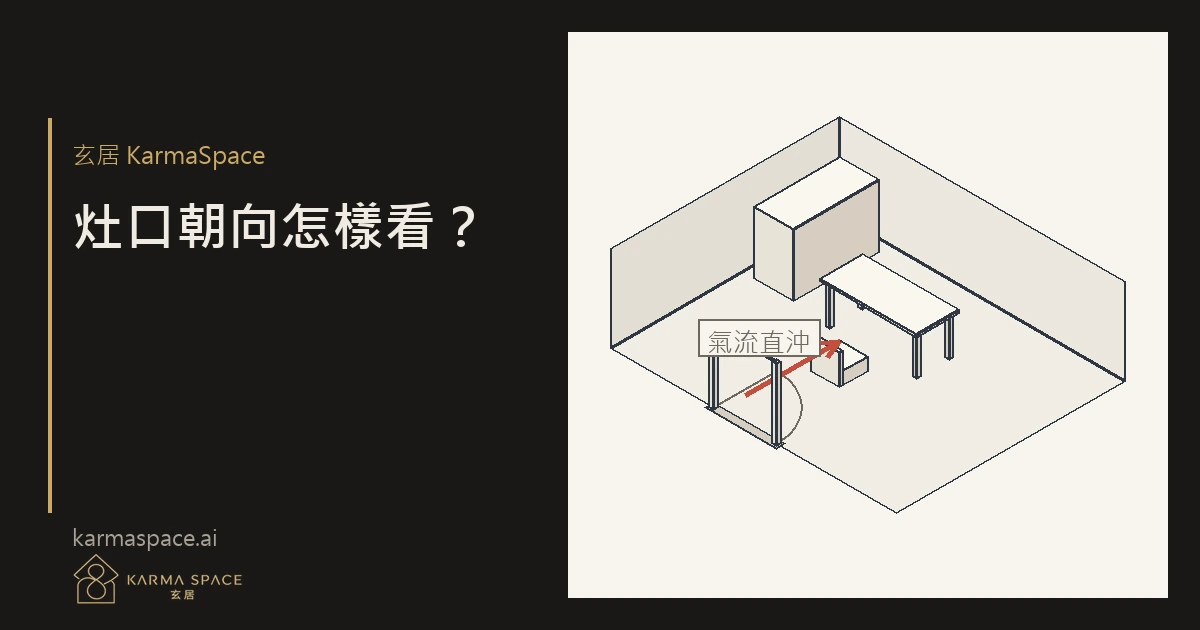
Mark one position and two arrows on the floor plan
First draw a box around the countertop where the stove is located; this is the "stove position." Draw an arrow for the direction you usually stand in front of the stove facing the appliance, then draw another arrow marking the direction in which the door leaf opens or the window mainly opens. If the stove has a control panel, write the control panel's location beside the box. Each of these items answers a question about position, facing direction, and the usage environment.
For example, if the stove is against the east wall and you stand in front of it facing east while cooking, both statements can be true at the same time. When switching to an induction cooker at the same countertop position, the stove model changes, but the countertop position and the person's facing direction may not change. When discussing the traditional stove mouth, different schools may define the stove mouth differently. You can first read Three judgments on stove position and flame direction, then ask whoever made the suggestion to point out which line they are using.
When replacing the stove, first check the model, cut-out, and servicing space
Copy down the dimensions of the existing countertop, the cut-out position, and the range hood information, and compare them with the installation instructions of the candidate stoves. Have the installer also check the equipment requirements, door and window opening, and the positions people can reach. For rented units, first ask the landlord and management office about the construction arrangements.
Household gas cooking stoves should be products bearing the Electrical and Mechanical Services Department's "GU" mark, installed and tested by a registered gas installer employed by a registered gas contractor. When switching to an induction cooker, ask the installer to check according to the model and the on-site power supply conditions. Do not move the gas pipe or alter the power supply yourself in order to change the facing direction. [Source 1]
Prioritize issues that can be improved even at the same countertop position
First, without turning on the stove, try opening the kitchen door and the refrigerator door, and pick up a pot and a cutting board once to see whether they collide or movement is blocked. Then check whether objects tend to pile up beside the stove, and whether the countertop can be reached when cleaning. Only after marking the problems should you decide whether to tidy up, replace with a suitable model, or seek a professional assessment.
Feng shui can be used to understand why family members care about the stove position. Whether it can be installed and used safely is judged by the equipment instructions and on-site conditions. If the two kinds of advice conflict, handle installation and safety requirements first.
Common questions
QIf the stove is against the east wall, does that mean the stove mouth faces east?
First clarify whether what is being measured is the stove position, the standing facing direction, the control panel, or a particular traditional method. The same kitchen can yield different descriptions.
QAfter switching to an induction cooker, do the directions need to be measured again?
If the stove position and the operating position are the same, you may directly use the measured orientation and recheck the installation requirements of the new stove.
QCan I turn the gas stove to another direction myself?
Installation and testing involving gas appliances should be carried out by a registered gas installer employed by a registered gas contractor.
Sources
- Electrical and Mechanical Services Department | Correct use and maintenance of domestic gas cooking appliances · Check the GU mark, installation, testing and the safety requirements for daily use.