Is a missing corner in a home always bad? For an L-shaped unit, first look at the extent and actual use
KarmaSpace translation
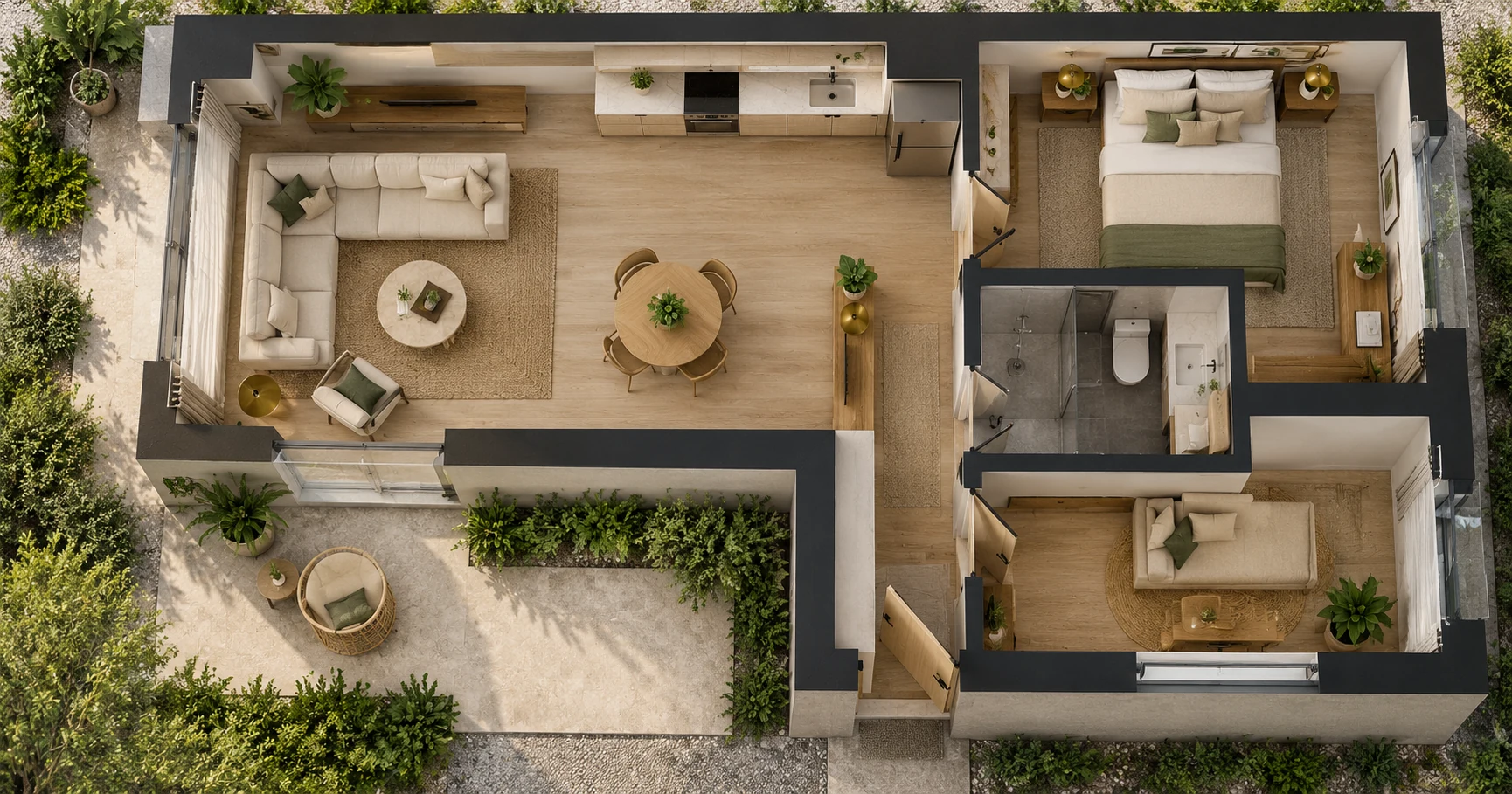
First check whether the plan you are looking at is really the unit boundary
Sales brochures, interior design drawings and hand-drawn sketches may use different boundaries. Some count the balcony in, some draw only the usable indoor area; others imagine the common corridor as an extension of their own doorway. If the scope is not consistent, discussing how much is missing from which corner has no common basis to begin with.
First verify against reliable plans and the actual usable area, and mark the uncertain parts; do not count areas outside your own scope just to make up a complete square. Matters involving ownership and engineering constraints cannot be confirmed by a feng shui sketch.
Irregular does not mean it cannot be a good home
An L-shaped or angled unit may bring constraints such as longer circulation routes, differently distributed daylight and harder furniture arrangement, and may also give some activities clearer separation. Each place needs to be looked at by use; do not infer that the whole home is bad simply because the outer outline differs from a square.
Traditional methods have different definitions and ways of taking a "missing corner"; directly mapping a certain direction to a family member's illness, marriage or fate lacks sufficient basis for a definitive judgment. Do not let a floor plan become a reason to blame a family member.
First check three practical locations
First, whether the corner makes a commonly used passage hard to walk through, and whether chairs or cabinet doors jam against each other when pulled out or opened. Second, whether the deeper corner has enough lighting during daily hours and can be cleaned conveniently. Third, whether furniture is left with only awkward fragmented space because of a slanted wall or recess. Each item can be photographed, measured and tested by acting it out.
For example, a recess may not suit a desk but may suit low-frequency storage; conversely, an intact wall by the window may suit a frequently used desk better. This is redistribution according to use needs, not a claim that moving cabinets restores the missing floor area.
"Corner-remedying" ornaments cannot add floor area or change structure
Mirrors, lights, or decorations can change how a space feels, but they cannot add legally usable space, repair structure, address water seepage, or replace windows. If you choose to keep traditional symbolism, you should clearly understand that it is only decoration or cultural reference.
Do not place heavy objects in unsuitable locations, alter shared areas, or carry out unevaluated works in order to "fill a missing corner." First compare furniture and lighting options that do not change the structure; if the problem requires professional design, discuss it with actual dimensions and floor plans rather than handing over only a nine-grid diagram.
Further reading and notes
See Zoning in Small Units and Recording Compass Directions. This article was produced with AI assistance; the model images are conceptual illustrations and are not the real dimensions, ownership, or feng shui conclusions of any unit; no effect of filling corners or changing fortune is guaranteed.
常見問題
問Does an L-shaped unit necessarily have a missing-corner problem?
Different traditional methods define things differently; you cannot judge good or bad fortune by appearance alone. First verify the scope, then look at actual circulation, lighting, and furniture use.
問Can placing a mirror fill in a missing corner?
Mirrors can change the visual impression; they do not increase actual area, change ownership, or repair structure. A decorative effect must not be treated as physically filling a corner.
問Does missing a certain corner necessarily affect a certain family member?
No such inevitable inference can be made, and family members should certainly not be blamed on this basis. For matters involving health or other significant issues, handle them according to real information and appropriate professional assessment.