What should be photographed when asking for online feng shui advice? A checklist for preparing floor plans, directions, and photos
KarmaSpace translation
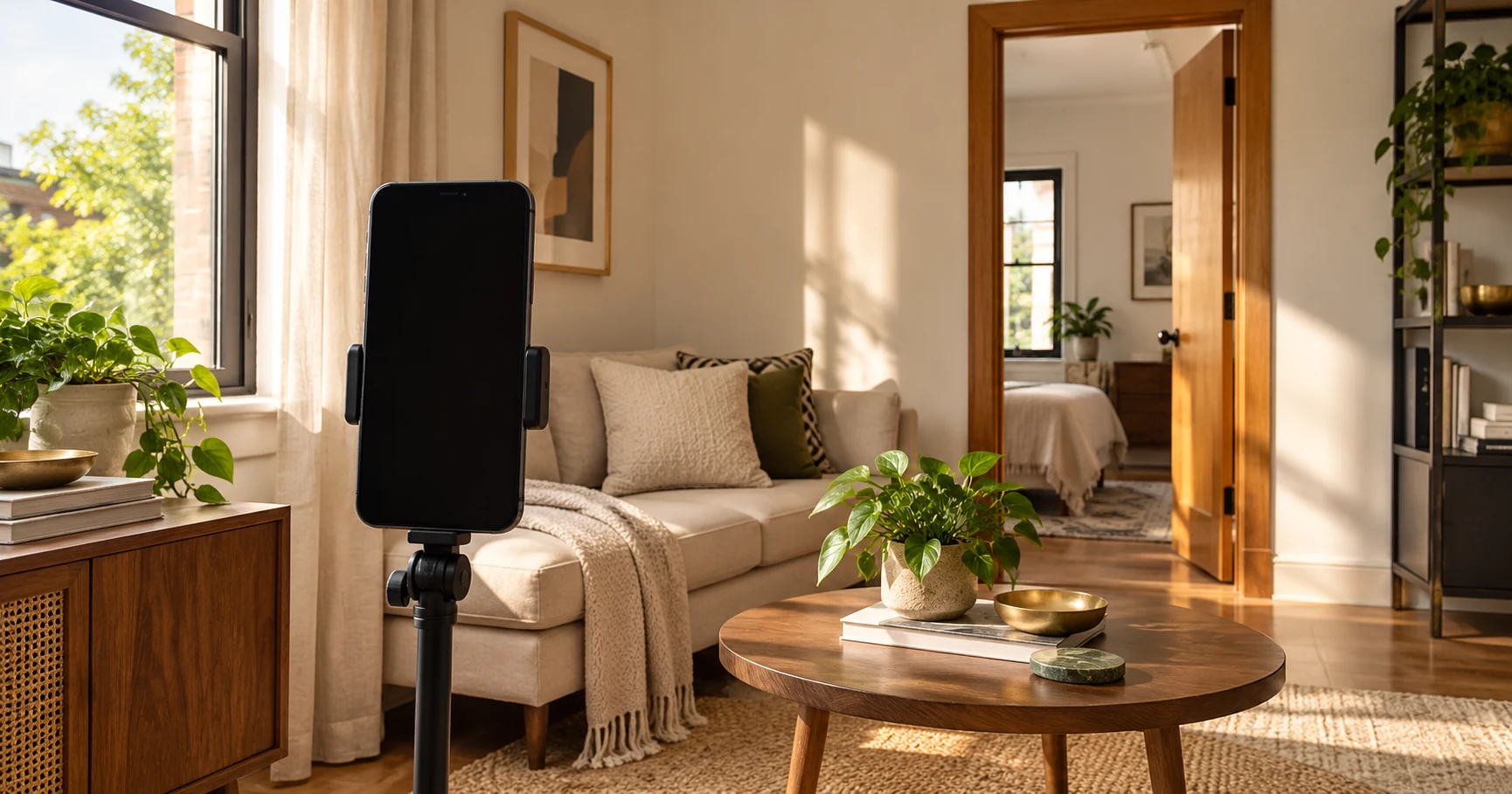
Photograph relationships first, not just a single piece of furniture
A close-up of a beautiful sofa does not show where the main door is, and a photo of the foot of the bed may not show the windows and passageways. When discussing home layout online, the most important thing is to help people understand the positional relationships. First state clearly the problem you want to solve, then take shots that support that question; there is no need to upload every personal item in the whole home.
Photos can provide visual clues, but they cannot replace on-site measurements, environment, equipment, and safety assessments. Anyone who guarantees conclusions about health, finances, or family outcomes from a single image should be viewed with caution.
A simple sketch: fixed positions and common movements
Mark the main door, main windows, room doors, bed, sofa, desk, and cabinets, and note which cannot be moved; if you have measurements, mark the real dimensions, and if not, clearly write "not measured." Do not straighten an irregular layout just to make the drawing look tidy, and do not treat shared areas as part of the unit.
Then draw the routes you commonly walk and the clearance for opening doors and pulling out chairs. If you are asking about a desk with your back to the door, you need to look at both the desk and chair and the passageway behind the door; if you are asking about two doors facing each other, the positions of both doors must be visible, not just one of them cropped into the frame.
Three types of photos: wide shots, viewing angles, and details
Wide shots show the relationship between doors, windows, and furniture; avoid excessive wide-angle lenses that make the space look larger than it is. Viewing-angle shots can be taken from where you usually sit or lie down, explaining how mirrors, lighting, or the doorway enter your line of sight. Detail shots are used to record specific problems such as door-leaf collisions and reflective spots.
Caption each photo with one sentence saying "from where, looking toward where," and also note the time of shooting and whether the lights were on. If the problem only appears at night, daytime photos are not enough to replace the nighttime situation; there is no need to clear away the obstacle being discussed just to make the photo look good, but personal items can be masked.
Directions and privacy, organized separately
The direction record should include the purpose of measurement, the location, the facing direction, the app and the north-setting; do not upload only a screenshot of an angle. You can refer to the compass recording method. Even with complete information, you should still note whether the reading was unstable, and must not pretend to be more accurate than it actually is.
Before sending, check for your address, door number, documents, photos, faces, login screens, and identifiable locations outside windows. Provide only information relevant to the question, and obtain consent from co-residents first. Keep original documents for yourself; there is no need to make complete ID documents public just to prove a birth date or property information.
A short template and notes for submission
You can write: "I want to fix the glare on my desk at night; the desk can't be moved, but the chair can be turned; attached are a sketch, a distant view from the window, and the view from where I sit; dimensions measured/not measured, with a separate note on how orientation was measured." Then read Rental Adjustment Order. This article was produced with AI assistance; the accompanying images are for illustration only, and the checklist is useful for discussion but does not constitute an on-site survey or a guarantee of results.
常見問題
問Can a single photo of a room determine the feng shui of the whole home?
This is not enough to account for the whole home's dimensions, doors and windows, orientation, and usage conditions. It can be used first to discuss a local issue, but a limited view should not be treated as a complete survey.
問Is it necessary to provide a full address?
In general, discussions of layout should not begin by disclosing a full address. Provide only the necessary information; if a service genuinely requires a location, first confirm the purpose, privacy, and how it will be shared.
問Is a wider-angle photo always better?
Not necessarily. An overly wide angle changes the perception of a space; positional relationships should be preserved and the shooting point noted, while dimensions should still be based on actual measurement.