How to Read Temple Culture from Wong Tai Sin to Diamond Hill? A Visiting Route from a Legislative Council Reply
KarmaSpace translation
What did the Legislative Council discuss on 11-11?
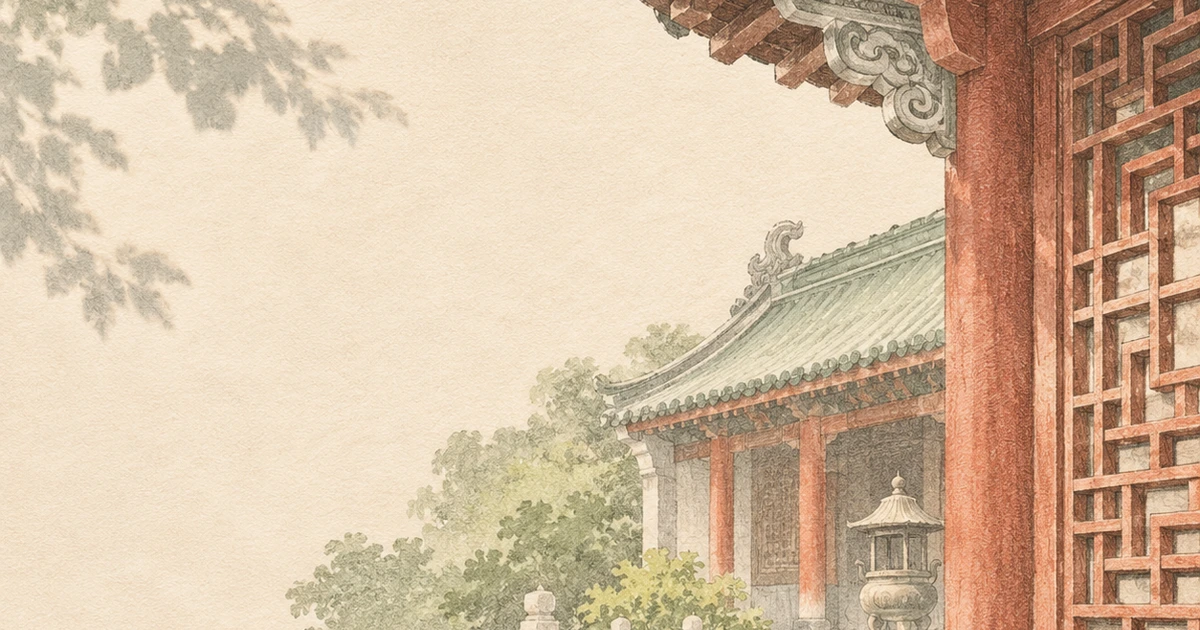
The wooden latticework and eaves are an illustrative architectural observation. For an actual visit, follow the latest arrangements announced by each site.
Legislative Council member Chan Chung-yee proposed on 2026-11-11 that religious and cultural attractions around Wong Tai Sin and Diamond Hill be linked and promoted together, and suggested adding culturally distinctive exits, guided-information boards and attraction sub-station names at MTR stations. am730 reported these proposals at 2:49 that afternoon.
The written reply from Secretary for Culture, Sports and Tourism Rosanna Law was published at 12:30 that day, stating that the government is studying temple-centred routes linking historic buildings and monuments. The reply also confirmed that Wong Tai Sin Temple, Chi Lin Nunnery and Nan Lian Garden already have MTR exit signs and in-station map guidance, and that the Tourism Commission has set up a total of 13 visitor direction signs across the two districts. The government reply sets out research directions and existing facilities, while MTR sub-station names remain a member's suggestion.
See folk customs at Wong Tai Sin Temple, and monasteries and gardens at Diamond Hill
The Hong Kong Tourism Board lists fortune-stick drawing as a common folk custom at Wong Tai Sin Temple, and also introduces the Confucian, Buddhist and Taoist elements presented there. To understand a practice, one can first look at how the worship area is arranged, then ask what role the fortune-stick tools, stick texts and interpretation each play. Worshippers seek blessings or guidance through them; this is a clue to understanding the custom, while judgments about one's own prospects should still be made according to actual circumstances.
At Diamond Hill, one can observe the wooden structure, courtyards and circulation order of the halls at Chi Lin Nunnery, then go to Nan Lian Garden to see how water surfaces, trees and paths change sightlines. The Tourism Board introduces Chi Lin Nunnery as a Buddhist site whose reconstruction drew on Tang dynasty style. Even if the two places can be arranged in the same itinerary, the religious use of the halls and the viewing approach of the garden are still worth understanding separately.
How can "three teachings in one" be understood?
In the Legislative Council document, the member used this phrase to describe the combination of cultural attractions in the same district, including the Confucian temple he mentioned as being planned. The Tourism Board also uses the same wording to introduce elements of different thought traditions at Wong Tai Sin Temple. When reading, one can first ask whether the term describes one temple, several locations, or a promotional concept. The scope differs, and that tells you whether to look up a site introduction or the latest progress of a project.
Those interested in space can note how entrances, courtyards and halls connect, and where one may pause and where one must give way. These details help people understand how a place is used. If one wants to read mountain forms, pond water or orientation as feng shui meanings, check whether the site provides corresponding explanations, and record observed design separately from one's own interpretation.
Plan an itinerary according to existing guidance
First check the opening areas announced by each site, then use in-station MTR maps to find exits. Choose the focus you want to see, such as fortune-stick customs, monastery architecture or garden composition. At religious sites, follow on-site instructions on photography, noise and worship circulation, and leave space for those who are worshipping.
For further reading, see The Cultural Context of Drawing Lots and Interpreting Them and Offerings and Return Respect Arrangements at Shui Yuet Kung.
Common questions
QHas the government announced a new route from Wong Tai Sin to Diamond Hill?
The reply dated 11-11 stated that a temple culture walking route is under study, and set out existing guidance for attractions. To visit on your own, you can use the maps inside MTR stations and publicly available information from the venues to plan your itinerary.
QDoes Diamond Hill Station already have a secondary station name for Chi Lin Nunnery or the Confucian Hall?
The secondary station name was a suggestion raised by a legislator in a question. The government's reply mentioned existing exit guidance, in-station maps and online tourism information.
QMust you draw a lot when visiting Wong Tai Sin Temple?
Drawing lots is a custom that worshippers may take part in according to their personal wishes. If you only want to learn about the history or architecture, you can also visit according to the venue's guidance.
Sources
- Hong Kong Government Press Release | LegCo Question 8: Chinese cultural attractions at Wong Tai Sin and Diamond Hill · Published on 2026-11-11 at 12:30 Hong Kong time, containing the legislator's question of that day and the Secretary's written reply.
- am730 | Chan Chung-yee proposes linking the cultural attractions of Wong Tai Sin and Diamond Hill · Published on 2026-11-11 at 14:49:23 Hong Kong time, reporting the legislator's suggestions on MTR guided tours and secondary station names.
- Hong Kong Tourism Board | Wong Tai Sin Temple · The permanent attraction page does not list a publication date; it was checked for Wong Tai Sin Temple's address, lot-drawing custom and religious and cultural background.
- Hong Kong Tourism Board | Chi Lin Nunnery and Nan Lian Garden · The permanent attraction page does not list a publication date; it was checked for the addresses of the two sites and the architectural background of the nunnery and garden.