A new moss in Sha Tau Kok’s fung shui woodland carries the name of a Hakka study hall
KarmaSpace translation
What did the research confirm about the new species found in Sheung Wo Hang?
According to a report by Bastille Post on 11-18, the editorial and research team of the Hong Kong Moss Flora, coordinated by the Agriculture, Fisheries and Conservation Department, discovered Syrrhopodon kangyungensis in the fung shui wood at Sheung Wo Hang in Sha Tau Kok in 2026-5. The related study was published in the plant taxonomy journal Phytotaxa on 11-10. The public abstract gives the scientific name Syrrhopodon kangyungensis and explains that the researchers used comparable features such as leaf shape, leaf veins and cell surfaces to distinguish it from similar species. The discovery site and month are reported by Hong Kong media, while the scientific name and the basis for classification can be checked against the paper's abstract.
The researchers' work is a comparative classification. The paper's public abstract uses leaf outlines, morphology when wet and dry, leaf vein surfaces, and differences in leaf cells to explain how it is distinguished from the similar species in the same genus, Syrrhopodon armatus. Merely seeing green moss in a patch of forest only records a single environmental observation. The details the researchers compare in the material are the evidence for judging whether a new species can be established separately.
The description of a new species answers how the species can be identified. To know how widely it is distributed in Hong Kong and how large the population at Sheung Wo Hang is, other surveys are still needed. To study the role of this woodland for mosses, one could further compare tree shade, humidity and moss distribution to see whether the observations show a consistent relationship.
What records do Kang Yung Study Hall and the fung shui wood each preserve?
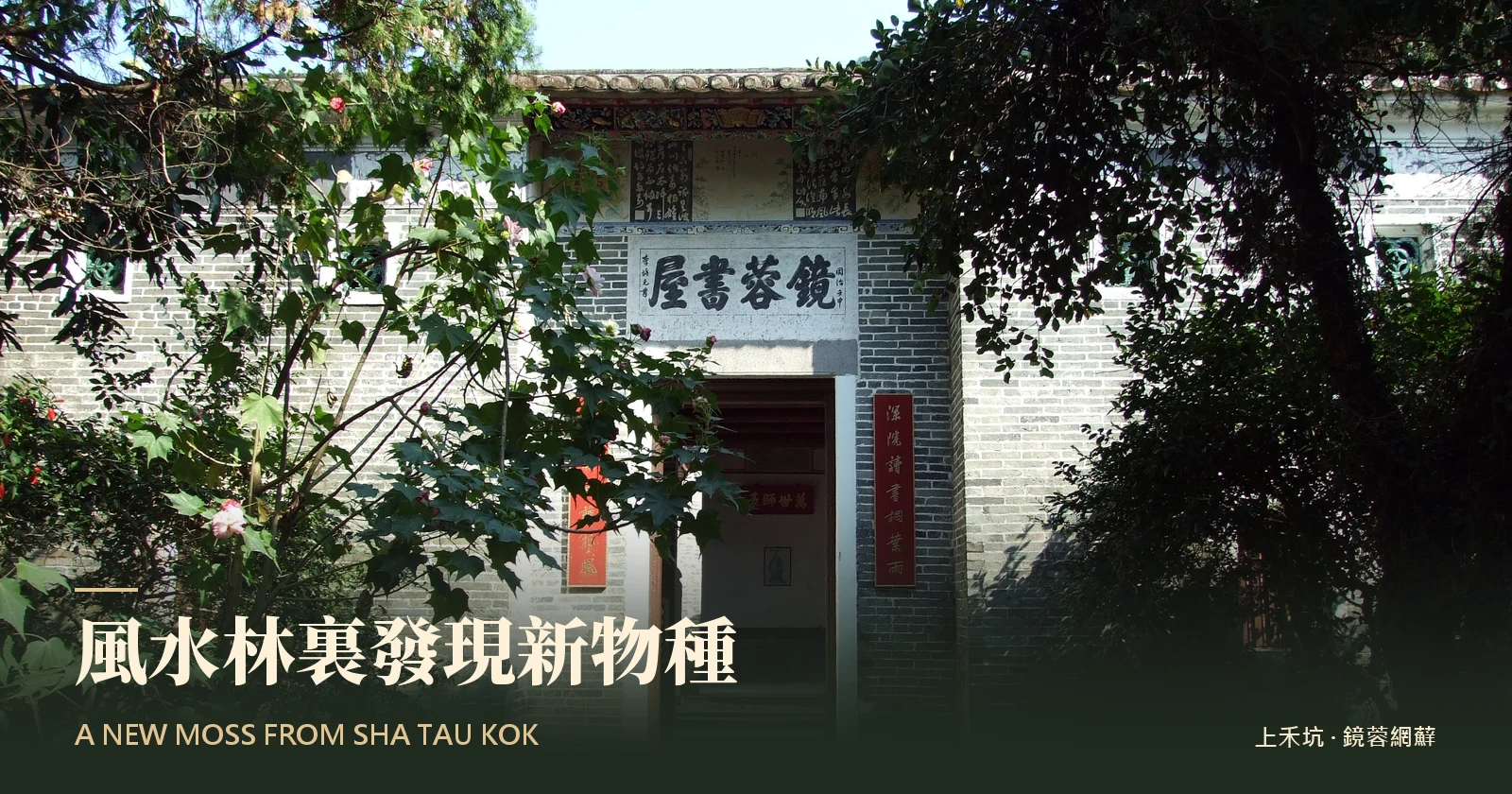
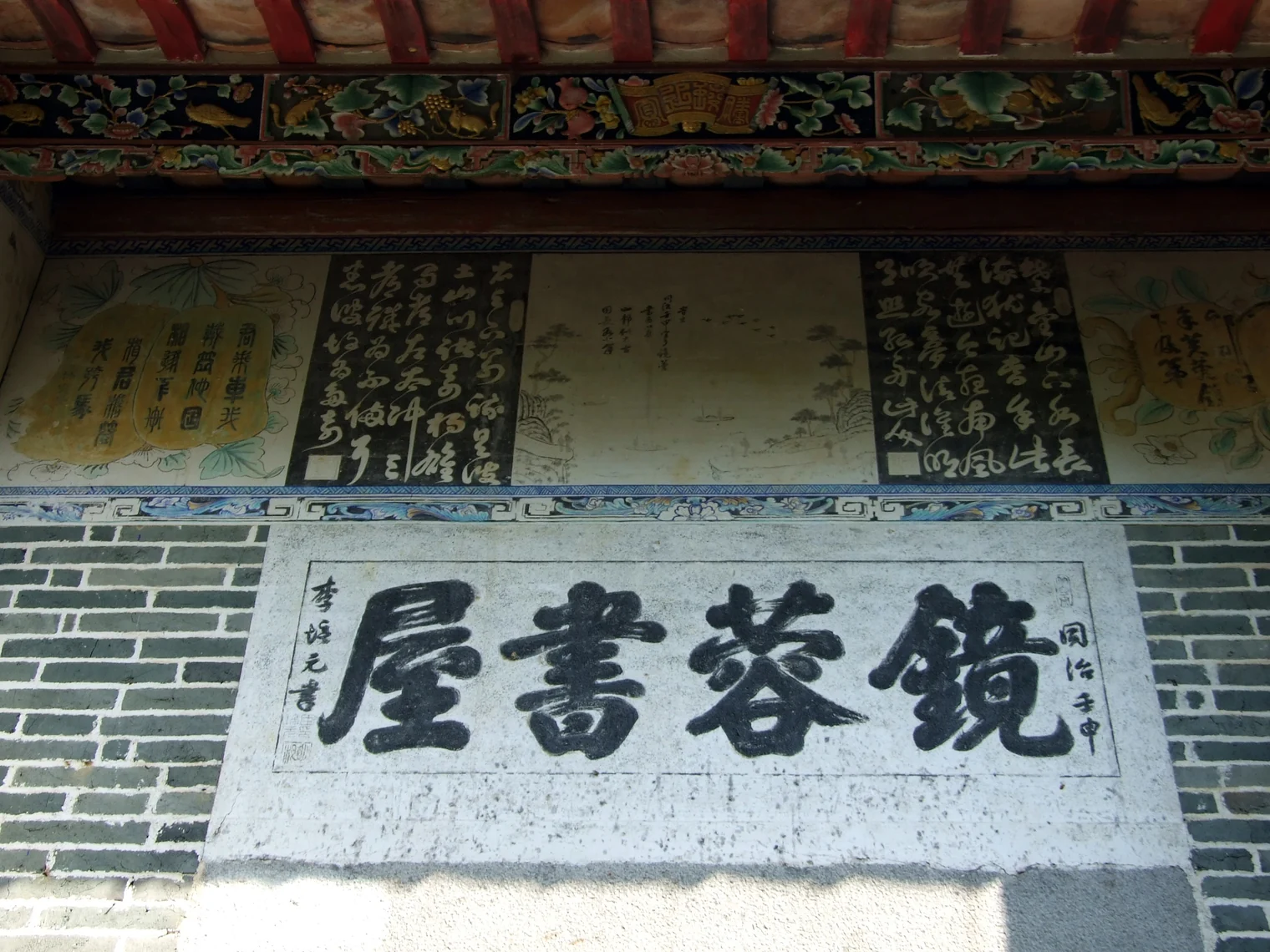
According to Hong Kong media reports, the specific epithet kangyungensis is taken from the nearby Kang Yung Study Hall. The Antiquities and Monuments Office records that the study hall is located in the Hakka village of Sheung Wo Hang and was built by the local Li clan for the education of children in the area. The study hall was declared a monument in 1991. The scientific name brings a nearby landmark into the taxonomic literature and also gives readers an entry point for looking into local history.
The name "fung shui wood" allows the relationship between village houses, terrain and woodland to be understood through traditional feng shui culture. To know why the villagers of Sheung Wo Hang preserved this woodland at the time, and how they used or managed it, one would still need village histories, old maps or oral accounts recorded with consent. Even if a map shows the relative positions of the houses and the woodland, the historical motives still require supporting evidence from written or oral sources of the time.
The cover is a file photo of the front entrance of Kang Yung Study Hall, taken on 2009-11-5. Photo: Chong Fat / Wikimedia Commons (CC BY-SA 3.0).
How do feng shui beliefs and customs influence villagers' care of woodlands?
The Hong Kong Herbarium explains that some villages in South China understand the patch of woodland behind the village as a landscape that protects the village. Villagers avoid cutting trees at will; in some places they preserve the existing vegetation and plant useful everyday plants at the woodland edge. A village-back woodland can therefore preserve clues about beliefs and customs, land use, and care practices at the same time. The Herbarium's explanation also uses Sheung Wo Hang, located at the foot of the hills, as an illustrated example.
At the ecological level, the Herbarium notes that some Hong Kong feng shui woodlands preserve low-altitude broadleaf forest habitat, providing growing space for lowland plants. When applying this kind of general information to a single village, the local woodland's history and habitat must be checked again. This new species information can serve as one specific plant record; as for what protection rules exist in the village and how the woodland formed, information about Sheung Wo Hang itself should still be sought.
How can the village and the woodland be placed on the same map?
One can first identify the study hall from heritage information, then use public maps to find the approximate relationship between the village, the slopes and the woodland. When making notes, mark clearly which positions are visible on the map and which are recorded in documents. If planning a visit, check the opening arrangements for the monument and roads first, observe along public paths and take environmental photographs only, avoiding picking or disturbing plants on the woodland floor. The Antiquities and Monuments Office notes that from 2026-5-20 the exhibition room of the study hall is temporarily closed, while the other parts of the study hall remain open.
To learn about village cooperation in the area, you can read further on the Tai Ping Ching Chiu jointly held by the Hing Chun Alliance and seven villages in Sha Tau Kok. To compare how settlements in the New Territories preserve spatial clues such as water bodies, private schools and temples, see the fung shui pond and Chik Kwai Study Hall at Lin Fa Tei in Pat Heung.
Common questions
QWas Syrrhopodon kangyungensis found inside Kang Yung Study Hall?
The discovery location listed by Bastille Post is the Sheung Wo Hang feng shui woodland. According to the newspaper, the specific epithet in the scientific name comes from the nearby Kang Yung Study Hall.
QWhat do month 5, 11 month day 10, and 11 month day 18 each represent?
The discovery month listed in Hong Kong media reports is 2026 year 5 month; the taxonomic paper was published on 11 month day 10, and the Hong Kong media report was released on 11 month day 18. The report does not specify the collection date.
QCan the discovery of a new species be used to infer the village's feng shui design at the time?
The description of a new species provides evidence for plant taxonomy. To investigate a specific village's geomantic conception, woodland layout, and uses, local records, historical maps, or oral accounts are needed for cross-verification.
QCan a species be confirmed from a single distant photograph?
A distant photograph can document habitat. The diagnostic features listed in the taxonomic paper include leaf veins and cell surfaces, and comparison requires materials that can show these features.
QWhat is the difference between a feng shui woodland and an ordinary woodland beside a village?
Feng shui woodlands usually have records related to village layout, villagers' beliefs and customs, or woodland protection practices. A woodland being dense or located behind houses is not enough on its own; maps, documents, and local oral accounts are also needed to identify it.
Sources
- Bastille Post | Kang Yung moss discovered in Sha Tau Kok feng shui woodland · Published and updated on 2026 year 11 month day 18 at 15:20 Hong Kong Time. The report states that the discovery location is the Sheung Wo Hang feng shui woodland and the month is 2026 year 5 month, and explains the connection between the naming and the Kang Yung Study Hall.
- Phytotaxa | Taxonomic paper on a new moss species from Hong Kong · Published on 2026 year 11 month day 10. The public abstract was checked for the new species' scientific name and taxonomic features. The authors' affiliated institutions include Shenzhen Fairy Lake Botanical Garden, Guangxi Institute of Botany, the Hong Kong Herbarium of the Agriculture, Fisheries and Conservation Department, and the Shiu-Ying Hu Herbarium of The Chinese University of Hong Kong.
- Antiquities and Monuments Office | Kang Yung Study Hall, Sha Tau Kok · The standing page does not state a publication date. It was checked for the location of the Sheung Wo Hang Hakka village, the Li clan's private school use, and its designation as a monument in 1991. The original page also states that the exhibition room has been closed to the public since 2026 year 5 month day 20.
- Wikimedia Commons | Front photograph of Kang Yung Study Hall (Chong Fat) · Photographed on 2009/11/5. CC BY-SA 3.0. The revised cover has been cropped, typeset and converted to WebP under the same licence.
- Wikimedia Commons | Photograph of the door lintel inscription at Kang Yung Study Hall (Chong Fat) · Photographed on 2009 year 11 month day 5, CC BY-SA 3.0. The website version is a thumbnail and has been converted to WebP.
- Creative Commons | CC BY-SA 3.0 license terms · Applies to both the cover and door lintel photographs.
- Hong Kong Herbarium | Feng shui and feng shui woodlands · Standing information. Check the general origins of village-back feng shui woodlands and woodland protection customs. The page uses Sheung Wo Hang as an illustrated example.
- Hong Kong Herbarium | Overview of Hong Kong feng shui woodlands · Standing information. Check the value of Hong Kong feng shui woodlands for lowland broadleaf forest habitat and species conservation.